
Chat with us, powered by LiveChat

LED Failure Analysis

In the research and development and mass production of LED components, if the product experiences issues such as brightness degradation, electrical abnormalities, or premature failure, it often requires a systematic failure analysis process to identify the true source of the problem. LED failures may arise from factors such as chip structural defects, packaging process anomalies, material degradation, or electrostatic damage. Therefore, it is necessary to combine various electrical measurement and localization techniques to accurately interpret the failure mechanisms.


Fault localization


Through photon emission or electrical localization techniques, abnormal areas in LED components can be quickly identified, assisting in the analysis of short circuits, leakage, or process defect locations, and serving as an important basis for subsequent structural analysis and failure interpretation.


Thermal imaging, infrared micro-light microscopy, laser beam resistance anomaly detection


EMMI/InGaAs, OBIRCH defect detection and localization
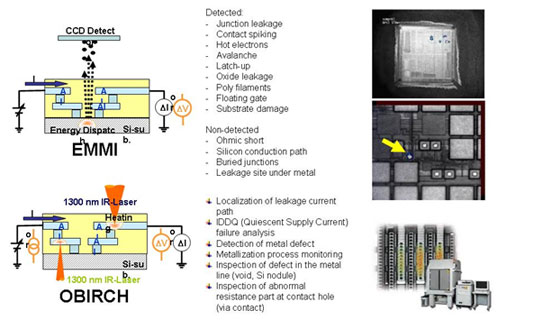
LED-7


EMMI/InGaAs, OBIRCH in failure analysis applications
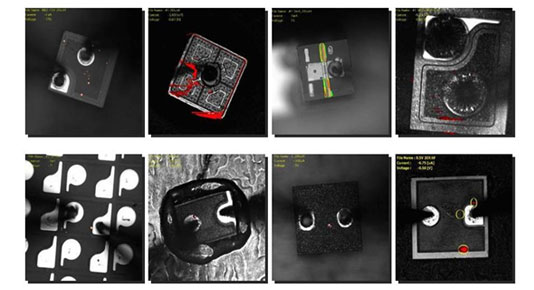
LED-8

We use cookies to allow our website to function properly, personalize content and advertisements, provide social media features, and analyze traffic. We also share information about your usage of our website with social media, advertising, and analytics partners.

Manage Cookies

Privacy Preference Center

We use cookies to allow our website to function properly, personalize content and advertisements, provide social media features, and analyze traffic. We also share information about your usage of our website with social media, advertising, and analytics partners.

View Privacy Policy

Manage Consent Settings

Necessary Cookies

Always Enabled

The operation of the website relies on these cookies, and you cannot disable them in the system. These cookies are usually set based on the actions you take (i.e., service requests), such as setting privacy preferences, logging in, or filling out forms. You can configure your browser to block or prompt you about these cookies, but this may result in certain website functionalities not working.

Marketing Cookies

Marketing cookies can be used to track the history of visitors to a website. The purpose is to display advertisements that are relevant to or attract individual users, making them more important to publishers or third-party advertisers.

Targeted Cookie
These cookies are set by advertising partners through our website. These companies may use cookies to build your interest profile and show you relevant ads on other websites. They only need to identify your browser and device to function. If you do not allow the use of these cookies, you will not be able to experience targeted advertising on different websites.

Social Media Cookie
These cookies are set by a range of social media services that we have added to the website, allowing you to share our content with friends and networks. They can track your browser across other websites and build your interest profile. This may affect the content and messages you see when visiting other websites. If you do not allow these cookies, you may not be able to use or view these sharing tools.