
PCB reliability testing
Printed Circuit Boards (PCB/PWB) are the core foundational platform of electronic products, responsible for the electrical and structural integration of various electronic components. Compared to individual electronic components that can be replaced or repaired,Once a PCB malfunctions, it often needs to be scrapped entirely, which has a significant impact on costs and delivery times.Therefore, its reliability requirements are no less than those of any semiconductor component.
PCB reliability testing is conducted through a series of standardized tests to verify the circuit board's performance inmanufacturing, assembly, reflow soldering, environmental stress, and long-term useUnder conditions, ensuring that the circuit board can still operate stably under harsh environments and long-term use is a key verification. MA-tek provides a complete solution from standard to automotive grade.
MA-tek has long collaborated with domestic and international PCB manufacturers, integrating existing material analysis, reliability testing, and failure analysis capabilities to provide comprehensive PCB reliability verification services.
1. Pre-treatment and Reflow Simulation Capabilities
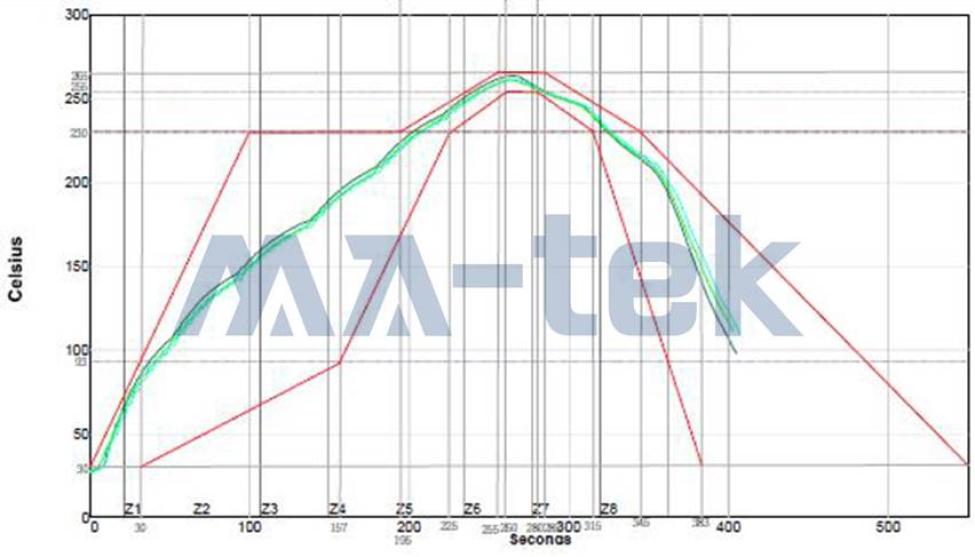
Ensure the process consistency of the PCB under actual assembly conditions, with testing focused on the thermal stress conditions endured by the PCB during the assembly and reflow processes, throughPre-treatment(Preconditioning) and reflow simulation, verifying the stability of materials, interlayer structures, and vias under high temperature cycling.
MA-tek's new reflow ovencan be accurately matchedIPC-TM-650 Method 2.6.26 / 2.6.27Specification requirements ensure that the testing conditions are highly consistent with the actual SMT process, avoiding the impact of deviations in reflow conditions on subsequent reliability assessments.
-
New Reflow system meetsIPC-TM-650 Method 2.6.27
-
Multiple reflow simulations can be conducted according to automotive and customer specifications.
2. Electrical Insulation and Ion Migration Reliability Testing
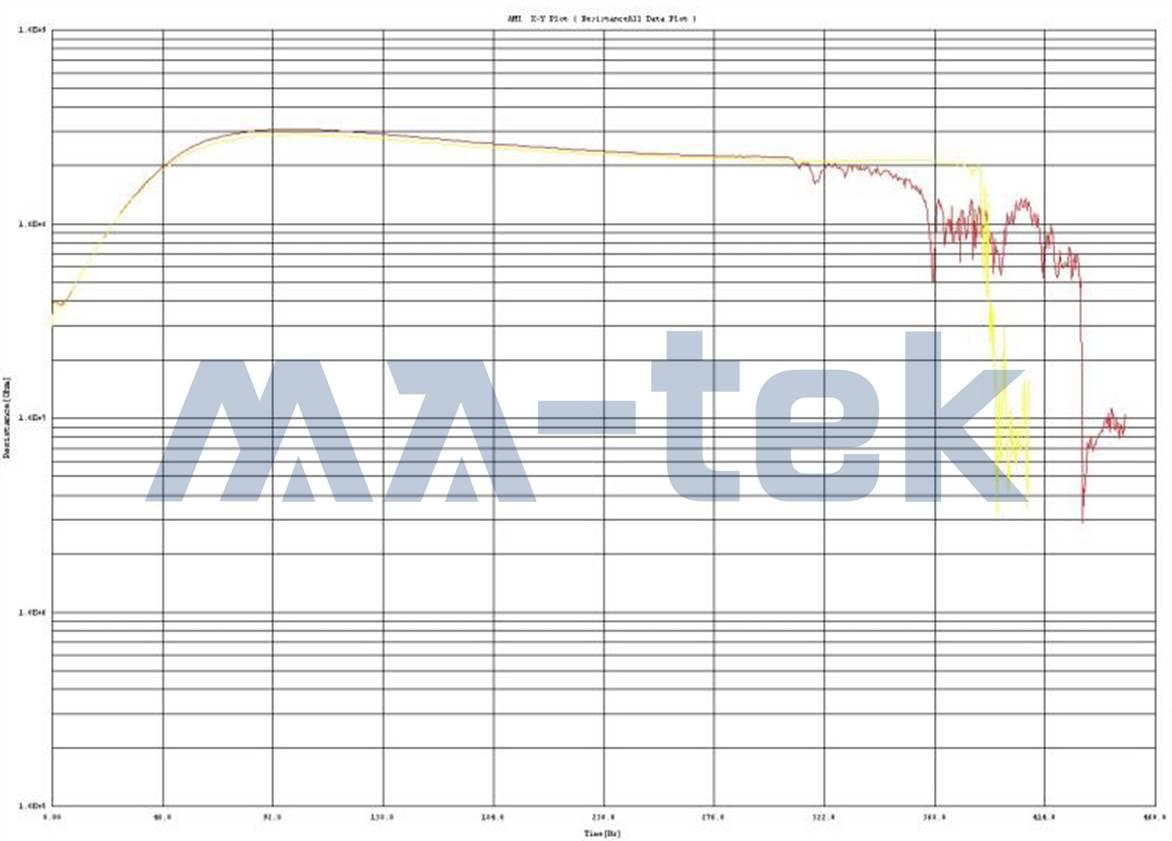
Assessing the long-term failure risk under high temperature, high humidity, and bias conditions, the surface and inner layers of the PCB may occur in high temperature, high humidity, and voltage bias environments.Ion migration (ECM)、Surface Insulation Resistance (SIR) or Conductive Anodic Filament (CAF) and other failure behaviors.
MA-tek can provide the highest500VBias capability, combined with a high-resistance dynamic measurement system, allows for real-time monitoring of impedance changes, accurately grasping the timing of failure occurrence and degradation trends, in compliance with IPC-TM-650 and automotive customer specification requirements.
-
Electrochemical Migration(ECM)
-
SIR(Surface Insulation Resistance)
-
CAF (Conductive Anodic Filament)
-
can provide up to 500V testing capability
-
using Espec AMI High Resistance Dynamic Measurement System
3. Via and Structural Durability Reliability Verification
From hole wall quality to lifespan assessment, via and interlayer structure are key reliability indicators of multilayer PCBs and HDI boards. Through thermal shock testing combined with low-resistance dynamic measurement, changes in via resistance can be monitored in real-time to assess hole wall cracking, plating fatigue, and structural degradation behavior.
Such tests can effectively support the lifespan estimation and quality verification of PCBs in automotive and high-reliability applications.
-
Thermal Shock Test (TST)
-
combined with Espec AMR low resistance dynamic measurement equipment
-
Provide more accurate interpretation of lifespan and degradation behavior.
4. Integrated Technical Services (Total Solution)
From experimental design to result interpretation, MA-tek integrates three core capabilities: process pre-treatment, electrical insulation, and structural durability, providing compliance withIPC-TM-650, IPC-6012 / 6013 / 6016and customer-customized PCB reliability testing services, assisting customers in reducing mass production risks and smoothly entering the high reliability and automotive markets.
-
Testing planning and method selection recommendations
-
Customized specification integration (IPC/automotive/customer specifications)
-
Test execution, data analysis, and failure interpretation
Printed circuit boards can be divided into rigid circuit boards (Rigid PCB), flexible circuit boards (Flexible PCB), and rigid-flex boards (Rigid-flex PCB). Structurally, they can be divided into single-sided boards (Single-Sided PCB), double-sided boards (Double-Sided PCB), multilayer boards (Multilayer PCB), and high-density interconnection boards (HDI).
After decades of technological evolution,International Electronics Industry Alliance (IPC, Association Connecting Electronics Industries) has, for PCB Electrical performance, material application, appearance quality and reliability requirementsA complete standard system has been established, becoming a common language for global PCB manufacturing and verification. The IPC documents most commonly used in the industry currently include:
- IPC-A-600Printed Board Acceptability
- IPC-6011General PCB Performance Specifications
- IPC-6012Hard PCB certification and performance specifications
- IPC-6013Soft Board PCB Certification and Performance Specifications
- IPC-6016HDI PCB performance specifications
- IPC-TM650PCB Testing Methods Manual
With the rise of automotive electronics, 5G, AIoT, electric vehicles, and high-performance computing applications, PCBs need to operate stably for a long time under high temperatures, humidity, vibration, and voltage changes. Especially in the automotive market, manufacturers have extremely high reliability requirements and often customize testing specifications to ensure that products remain reliable in extreme environments. Therefore,Reliability testing has become a key threshold for PCB manufacturers to enter the high-end application market.。
MA-tek has long collaborated with many domestic and foreign PCB manufacturers, integrating material analysis and failure analysis technologies to provide compliance withIPC-TM-650multiple reliability tests according to customer-specific specifications, including:
-
Reflow Test:The new reflow oven meets the IPC TM-650 Method 2.6.27 standard, which can simulate the thermal stress of the soldering process and assess the thermal resistance of the PCB.
-
Ion Migration Test (Electrochemical Migration Test):Provide 500V voltage testing capability, can conductSurface Insulation Resistance (SIR) and Conductive Anodic Filament (CAF)Testing the insulation reliability in humid environments.
-
Via Reliability Test:Using a low-resistance dynamic measurement system (Datalogger) to monitor resistance changes over a long period, allowing for a more accurate assessment of the lifespan performance of through-holes under thermal cycling or stress.