Chat with us, powered by LiveChat

SMT surface mount device adhesion technology services

SMT surface mount device adhesion technology services focus on combining various components with printed circuit boards to form a functional system. Throughout the entire process, the quality of solder joints for IC components is particularly emphasized, mainly due to the fact that high-density, high-pin-count IC components often use gate array packaging or similar structures, such as wafer-level packaging and fan-out packaging technologies.


What is SMT surface mount component adhesive technology?

Surface mount technology is a fundamental process in the electronics industry, aimed at combining various components with printed circuit boards (PCBs) to form a functional system. Throughout the entire process, the quality of solder joints, especially for IC components, is of greater importance, mainly due to the current high-density, high-pin-count IC components that are often packaged in ball grid arrays (BGA) or similar structures, such as wafer-level chip scale packages (WLCSP) or fan-out packaging technologies.


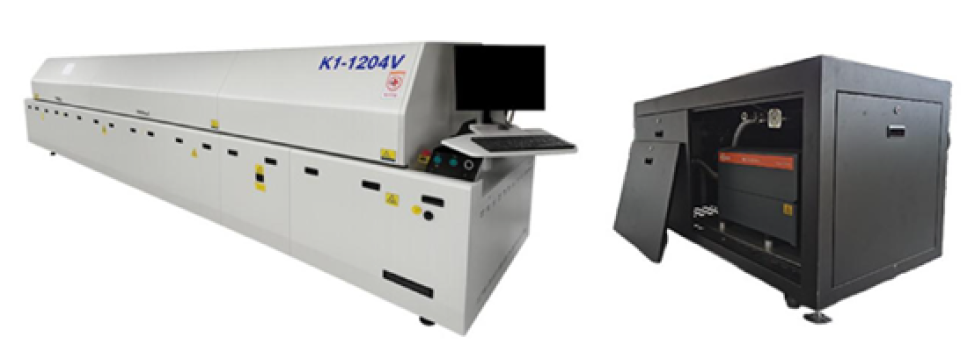
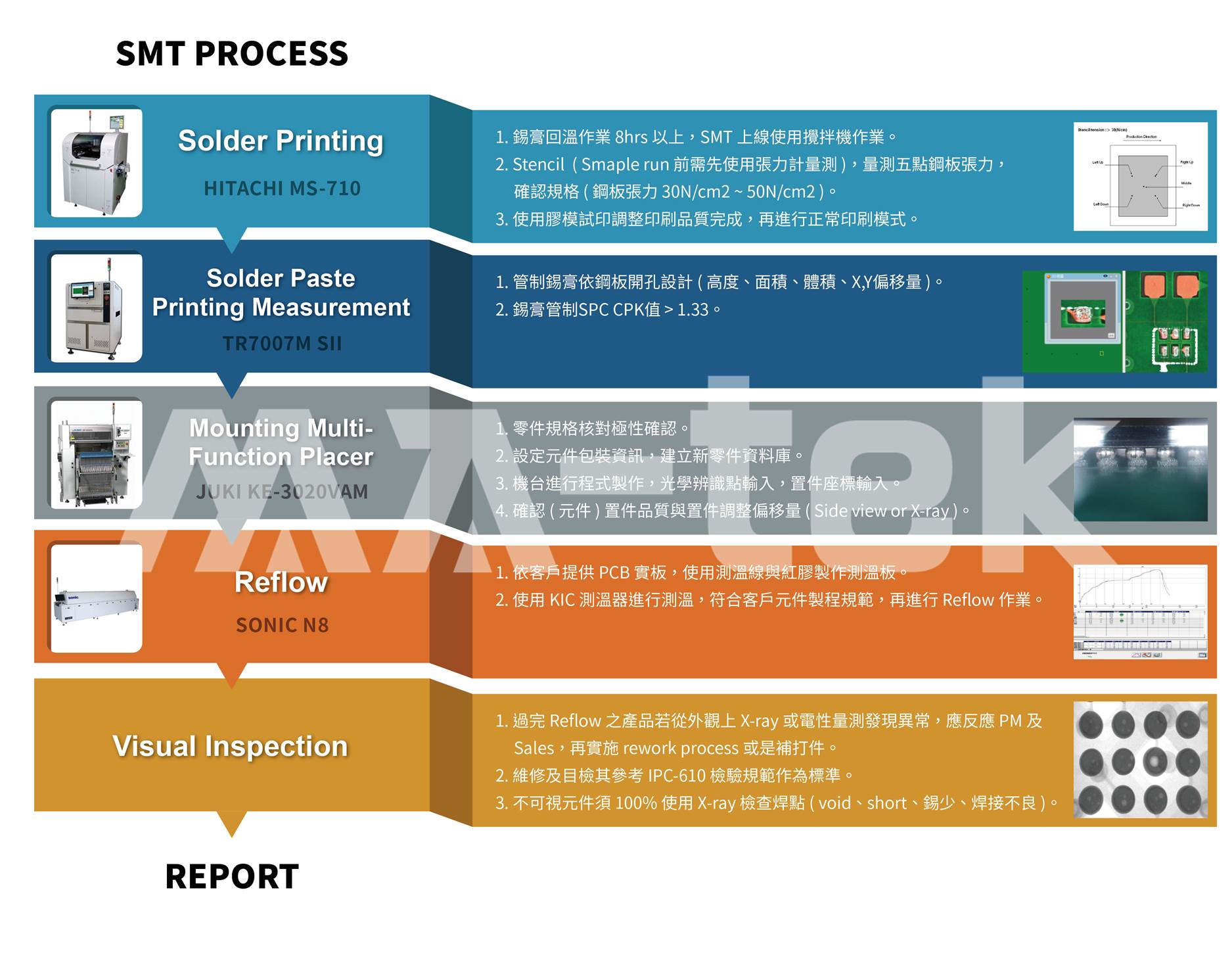
To quickly serve customers and provide stable product quality, MA-tek has established its own SMT experimental line, which includes equipment such as: Solder Paste Printer, SPI, Mounter, Reflow, and high-magnification optical microscope, to assist customers in board-level assembly services. The automatic inspection of solder paste volume helps control the quality of solder paste printing and automatically performs Cpk calculations to eliminate quality risks, improving the blind spots of traditional sampling measurements. The Mounter can provide design applications with a pin pitch of 0.25 mm, leading the domestic level. The Reflow can provide nitrogen and control the oxygen content, optimizing solder joint quality. In addition, for wafer-level products (WLCSP), it also offers customers underfill processing services.RA1-6-1_SMT process-0
 

Solderability Test

Using the SMT process for solderability testing has more practical significance than the traditional tinning method, and is closer to the SMT processing standards, especially for BGA type components. Testing method referenceJ-STD-002Specification, throughSMTSolder paste printing on ceramic boards and reflow can simulate whether solder balls are rejected or not.
 
MA-tek SMT is managed by experienced engineers, providing customers with a one-stop testing service to ensure sample consistency and high yield. It also offers DFM (Design For Manufacture) consulting and provides Consultant Service to thoroughly solve end quality issues for customers, meeting their diverse needs.


SMT vacuum reflow soldering service

Focus on solving component voids(Void)In response to the market trend for high reliability solder joint requirements, MA-tek provides advancedSMTThe vacuum reflow soldering service is designed for high power and high reliability electronic components, effectively reducing void rates and improving solder joint reliability. In MA-tek's rich experience in vacuum reflow soldering, voids are effectively reduced from>30% reduced to < 5%


See technical article for details:https://www.matek.com/en/techarticle-detail/20250919/?tab=intro


Q&A
Q1. What is the smallest stencil pitch that can be achieved?
A. The thickness of the steel plate mainly uses 0.04 & 0.06 & 0.08mm, and currently has been opened to 0.25 pitch.
Q2. What type of solder paste is mainly used?
A. The laboratory mainly uses solder paste from the manufacturer SMIC, model: M705-GRN360-K2-V.
Q3. What is the positioning accuracy of the placement machine? What is the minimum pitch that can be produced?
A. Laser accuracy 0.05; image identification 0.04mm, equipment specifications can produce 0.25 pitch.
Q4. Can the reflow control the oxygen content? What is the maximum ppm?
A. The reflow equipment can control the oxygen content, keeping it below 500ppm.
Q5. Can you provide flux clean operations?
A. Universal fixtures can be used to provide Flux clean services for different PCB sizes.
Contact
Contact Window
Taiwan Laboratory

Mr. Li

Ext. +886-3-6116678 ext:6530

Privacy Preference Center

We use cookies to allow our website to function properly, personalize content and advertisements, provide social media features, and analyze traffic. We also share information about your usage of our website with social media, advertising, and analytics partners.

View Privacy Policy

Manage Consent Settings

Necessary Cookies

Always Enabled

The operation of the website relies on these cookies, and you cannot disable them in the system. These cookies are usually set based on the actions you take (i.e., service requests), such as setting privacy preferences, logging in, or filling out forms. You can configure your browser to block or prompt you about these cookies, but this may result in certain website functionalities not working.