Chat with us, powered by LiveChat

LC-MS / MS liquid chromatography / mass spectrometer

LC-MS/MS is an analytical technique that combines liquid chromatography (LC) and mass spectrometry (MS) in tandem, integrating the high separation capability of liquid chromatography with the high sensitivity mass analysis capability of mass spectrometry. In the analysis process, the sample is first separated by the liquid chromatography system, allowing different components to be separated based on their polarity, molecular weight, and chemical properties before entering the mass spectrometer in sequence. Then, through the ionization source, the molecules are converted into charged ions, which are separated and detected in the mass analyzer based on their mass-to-charge ratio (m/z). The MS/MS (tandem mass spectrometry) technology of LC-MS/MS first selects specific parent ions, then further fragments them to produce daughter ions for analysis, thereby improving the accuracy and selectivity of qualitative and quantitative analysis. This technology is particularly suitable for analyzing thermally unstable, highly polar, or larger molecular weight organic compounds, and unlike GC-MS, it does not require volatilization or derivatization treatment, thus it is widely used in fields such as chemistry, medicine, and environmental analysis.
Analysis Application
Food and Environmental Testing
Can detect food additives, pesticide residues, environmental pollutants, and other organic pollutants.
Analysis of drugs and metabolites
Commonly used in drug metabolism research and pharmacokinetic analysis to confirm the transformation and distribution of compounds in the organism.
Comparison of sample component differences
Can be used to compare the differences in chemical composition between different samples, such as analysis before and after the process, and normal versus abnormal samples.
Trace substance detection
LC-MS/MS has extremely high sensitivity and can detect trace substances at the ppb to ppt level, making it suitable for the analysis of environmental pollutants and residues.
Analysis of polar compounds
Applicable to polar compounds that are not easily volatile or have poor thermal stability, such as amines, amino acids, peptides, and other molecules.
Qualitative and quantitative analysis of organic compounds
Precision analysis can be conducted on various organic small molecules and macromolecules, such as pesticides, drug metabolites, additives, and pollutants.
Physical and Chemical Properties Analysis Summary Table
Item Tools Description
Size / Size Distribution DLS Particle Size Analysis (Optical Scattering Principle)
Surface Charge Zeta Potential Surface charge (the positive and negative charges carried by particles)
Composition / Impurity ICP-MS Trace element detection (widely used in metal detection, soil testing, environmental water quality testing, food testing, and drug testing)
Composition / Impurity LC-MS Identification of component types and structures in samples (identification of biochemical metabolites, determination of impurities)
Composition / Impurity UPLC Component separation and identification
Composition / Impurity TGA sample purity, material surface composition
Composition / Impurity DSC Sample solid-liquid-gas phase transition temperature, distinction of mixed materials.
Types of machines

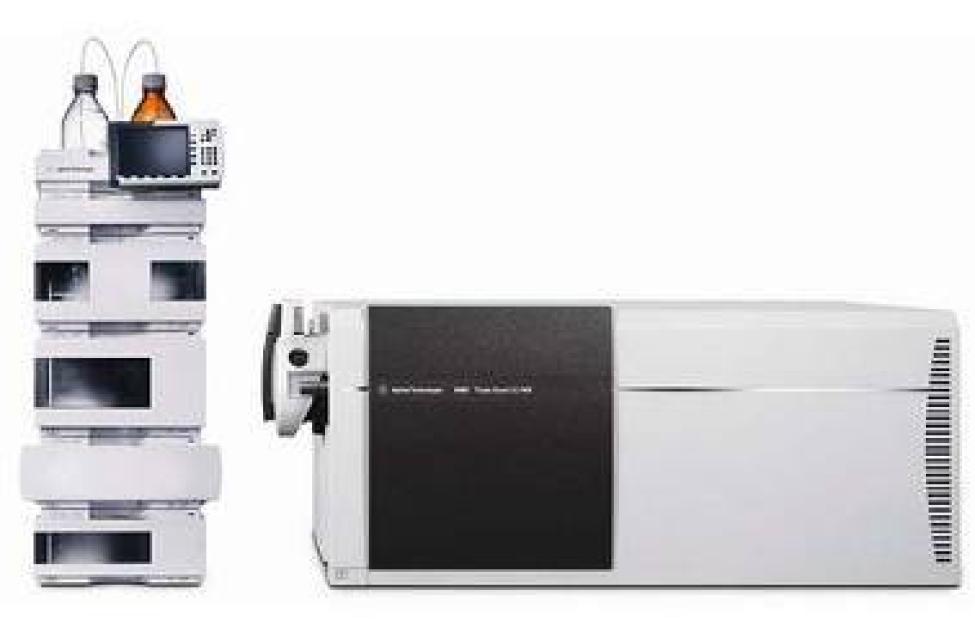
Agilent LC-MS/MS 6460C

Agilent 6460C LC-MS/MS isTriple Quadrupole (QqQ) mass spectrometry systemcombines the separation capabilities of high-performance liquid chromatography (LC) with the high sensitivity detection capabilities of mass spectrometry for precise analysis of trace organic compounds in complex samples.

This system is equipped withHigh sensitivity, high selectivity, and rapid analysis capabilities, through MRM (Multiple Reaction Monitoring)The technology can significantly enhance quantitative accuracy, making it particularly suitable for the analysis of target compounds in trace contaminants and complex sample matrices.

Agilent 6460C equipped withJet Stream ESI ionization technologyto improve ionization efficiency and signal strength, achieving detection limits in the ppb range or lower, making it suitable for applications in environmental, food safety, biomedical, pharmaceutical, and materials analysis.


Main Features
High Sensitivity Trace Analysis
Can detect organic compounds at extremely low concentrations.
High-speed scanning and high stability
Suitable for simultaneous analysis of complex samples and multiple components.
Agilent Jet Stream Electrospray Ionization Technology
Enhance ionization efficiency and signal strength, improving detection sensitivity.
MRM Multi-Reaction Monitoring Mode
Can accurately detect specific target molecules, improving analytical selectivity.
Triple Quadrupole Mass Spectrometry System
Provides high sensitivity quantitative analysis capabilities.
Contact
Contact Window
Taiwan Laboratory

Mr. Zhong

Ext. +886-3-6116678 ext:3275

Privacy Preference Center

We use cookies to allow our website to function properly, personalize content and advertisements, provide social media features, and analyze traffic. We also share information about your usage of our website with social media, advertising, and analytics partners.

View Privacy Policy

Manage Consent Settings

Necessary Cookies

Always Enabled

The operation of the website relies on these cookies, and you cannot disable them in the system. These cookies are usually set based on the actions you take (i.e., service requests), such as setting privacy preferences, logging in, or filling out forms. You can configure your browser to block or prompt you about these cookies, but this may result in certain website functionalities not working.