
DSC Thermal Micro-Differential Scanning Analysis Instrument
Differential Scanning Calorimetry (DSC) is a technique used to study materialsThermal properties and phase change behaviorimportant thermal analysis technique, its principle is to simultaneously measure the heat flow generated by the sample under test and the reference material under the same temperature program conditions.Heat Flow。
During the analysis process, the instrument uses a precise temperature control system to heat or cool the sample at a set heating or cooling rate. When the sample undergoes phase changes such as glass transition, crystallization, or melting at specific temperatures, it will absorb or release heat, resulting in a difference in thermal flow compared to the reference material.
These heat flow changes will be detected by the instrument and converted intoDSC curve (Heat Flow vs. Temperature)Through the DSC curve, important thermal property information of materials can be obtained, includingglass transition temperature (Tg), crystallization temperature (Tc), melting point (Tm), heat capacity, and reaction kinetics characteristics, etc.
When the sample is measured alone, the thermal properties of the material itself can be directly obtained. If the sample is attached to another substrate (such as a silicon wafer) or exists in a solution, it is necessary to measure it simultaneously.Heat flow change of the reference materialThen, calibration is performed through differential calculations to ensure the accuracy of the analysis results.
| Thermal events | Description |
|---|---|
| Tg | glass transition temperature |
| Tc | crystallization temperature |
| Tm | melting temperature |
| ΔH | enthalpy change |
-
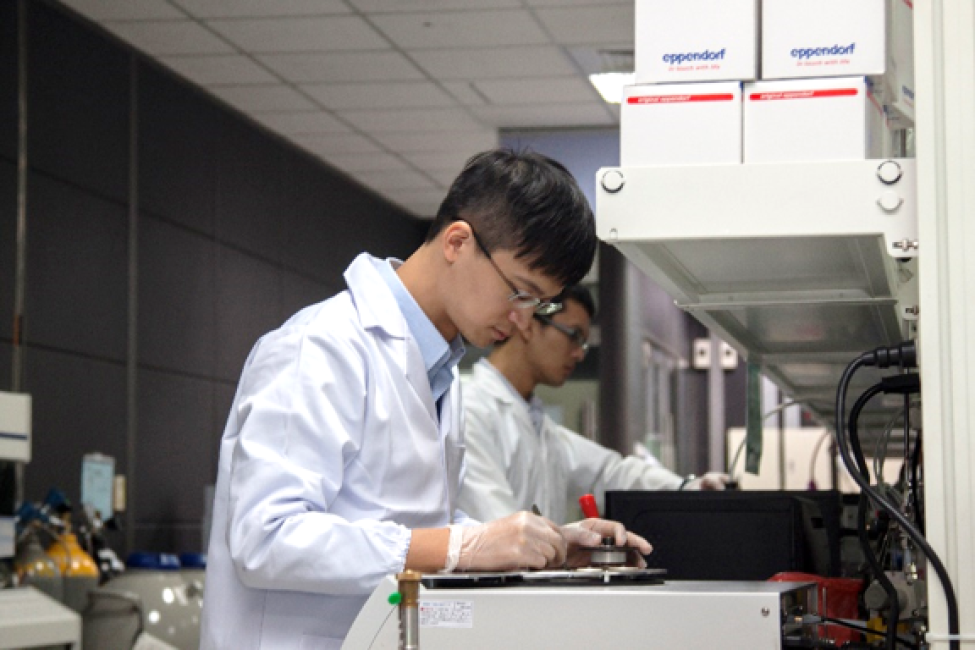
Technical personnel practical operation
-
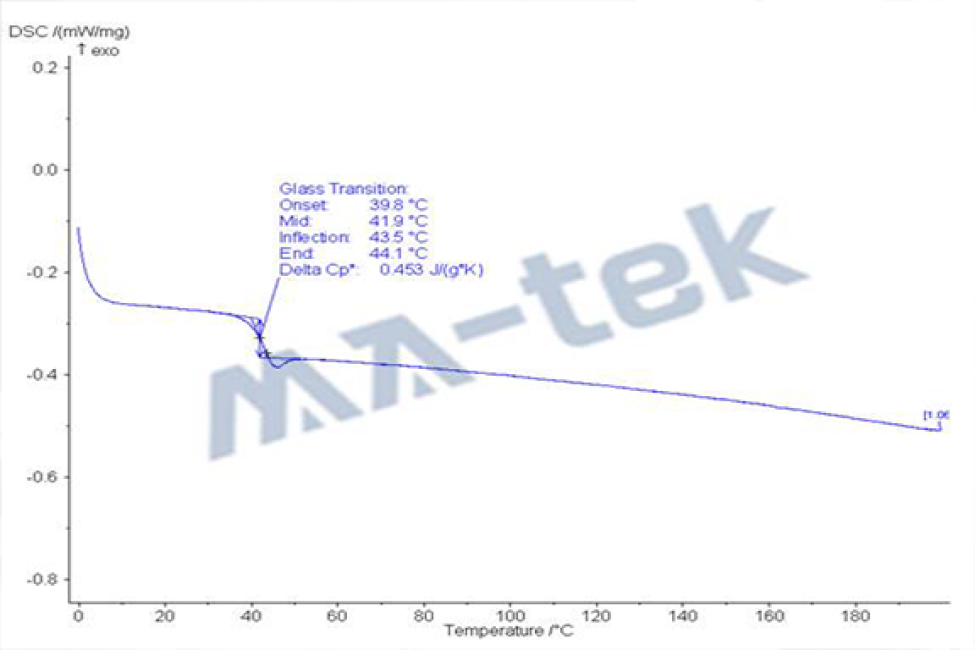
Glass Transition Temperature Diagram of Polymer Materials
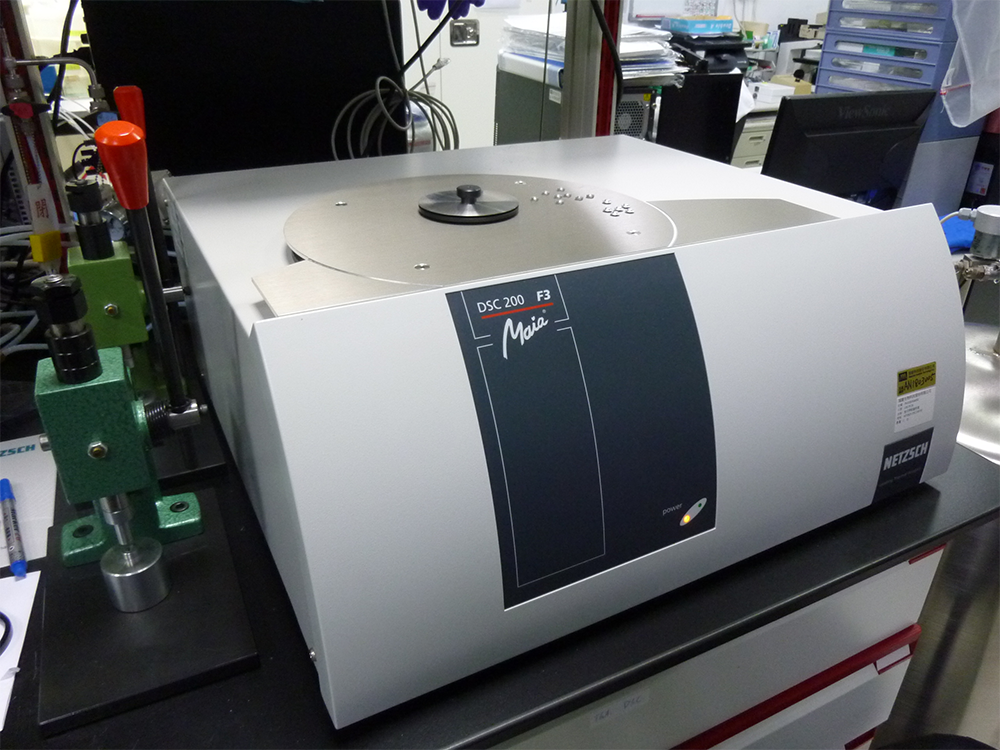
NETZSCH DSC 200 F3 Maia
NETZSCHDSC 200 F3 Maiafor high precisionDifferential Scanning Calorimetry (DSC)can measure the changes in materials during heating or coolingheat flow changesto analyze the thermal transitions and phase change behaviors of materials.
The instrument uses a precise temperature control system to simultaneously heat or cool the sample and the reference material, measuring the difference between the two.Heat FlowWhen materials occur at a specific temperature.Glass transition (Tg), crystallization (Tc) or melting (Tm)During phase changes, heat is absorbed or released, forming a DSC curve. By analyzing these heat flow signals, important thermal properties and structural information of materials can be obtained.
NETZSCH DSC 200 F3 Maia has excellent temperature control and high-sensitivity sensors, which can accurately measure the thermal transition behavior of materials and is widely used inpolymer materials, electronic materials, nanomaterials, and compositesThermal property research.