
Laser etching to remove encapsulation
Laser Decapsulation isnon-contact process, commonly used in Failure AnalysisThe sample preparation technology, used in many analysis processes that require local opening or rapid testing, irradiates the packaging material with a high-energy laser beam, causing the epoxy resin to undergo thermal decomposition or ash, thereby gradually removing the packaging layer and exposing the crystal grains and internal structures.
Compared to chemical de-encapsulation, laser de-encapsulation hasHigh precision processing capabilityBy controlling the laser power, scanning range, and processing depth, the opening area can be precisely adjusted, effectivelyControl window sizeto avoid excessive etching that could damage the grain or gold wire structure, while also reducing the impact on the electrical properties of the IC.
MA-tek has been deeply engaged in the field of semiconductor material analysis and failure analysis for a long time, possessing a completeLaser de-encapsulation and microanalysis integration capabilityThrough high-precision laser de-packaging equipment and professional process control, IC packaging resin can be accurately removed, effectively protecting the die and internal packaging structure, providing high-quality samples for subsequent failure analysis and microscopic inspection.
MA-tek can alsoIntegration of laser de-encapsulation and chemical etching de-encapsulation technology applicationsUsing laser for local opening first, and then using chemical etching to remove residual packaging materials, to ensure that the grain structure is completely exposed and to improve analysis quality, combined withOM, SEM, FIB, and TEM and other material analysis techniquesMA-tek can provide complete IC failure analysis and packaging structure inspection services, assisting customers in quickly locating problems and enhancing product reliability.
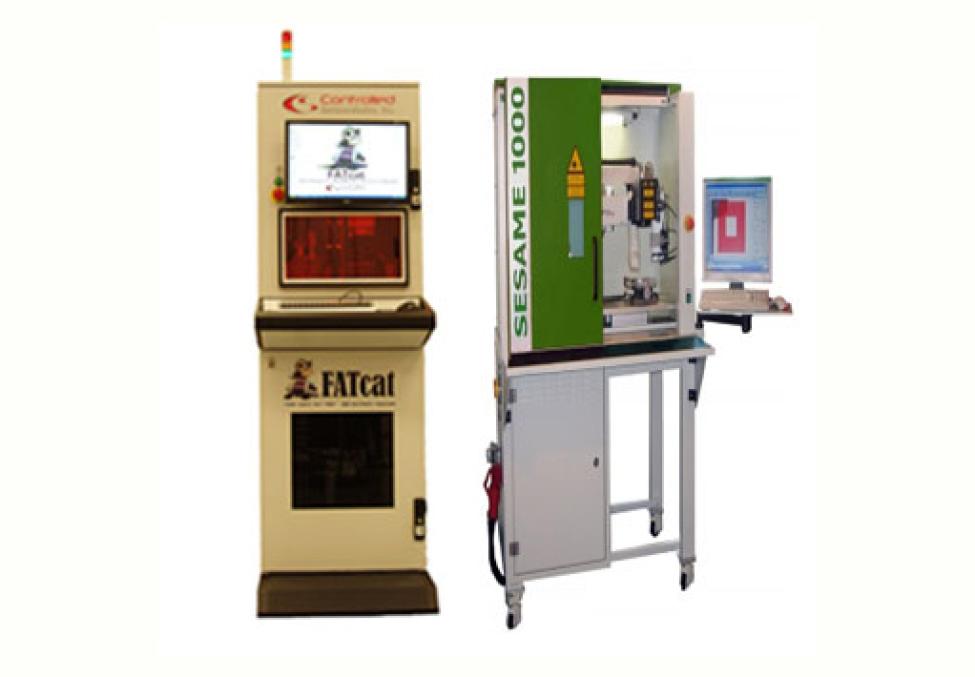
- Precise control of window opening range:Through laser processing technology, the area and depth of de-packaging can be precisely controlled to avoid excessive etching that may cause damage to the die or gold wire structure, making it especially suitable for localized opening and precision analysis requirements.
- Fast and efficient sample preparation:Laser de-encapsulation can quickly remove packaging materials, significantly shortening sample preparation time and improving the efficiency of failure analysis and quality inspection.
- Reduce the impact on the electrical properties of the components:Through precise laser energy control, the impact of the processing on the electrical properties and internal structure of the IC can be effectively reduced, ensuring the reliability of subsequent electrical analysis.
- Applicable to various packaging structures:Laser de-encapsulation technology can be applied to various IC package types, such as QFN, BGA, SOP, QFP, etc. It can be customized for different analysis needs.
After the laser de-encapsulation is completed, the die and internal packaging structure can be exposed for subsequent microscopic analysis and circuit testing, such as IC failure analysis, packaging structure inspection, gold wire bond quality analysis, circuit observation, and reverse engineering.
-
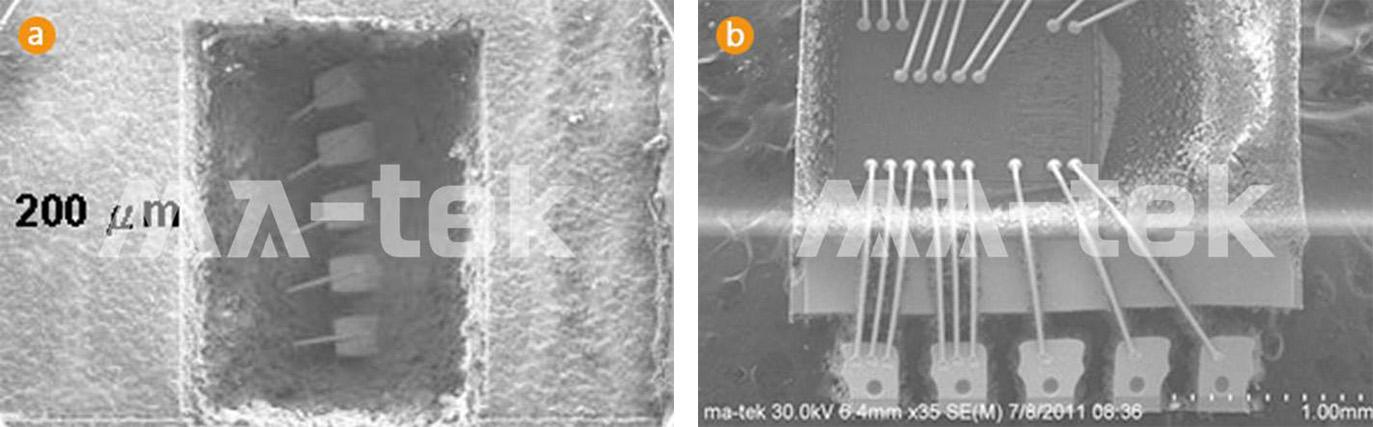
Figure | Laser precision window opening to observe grain structure
Laser de-encapsulation can precisely control the window opening range, allowing for the localized removal of packaging resin and exposing the die and internal gold wire structures, facilitating subsequent microscopic observation and electrical analysis.
-
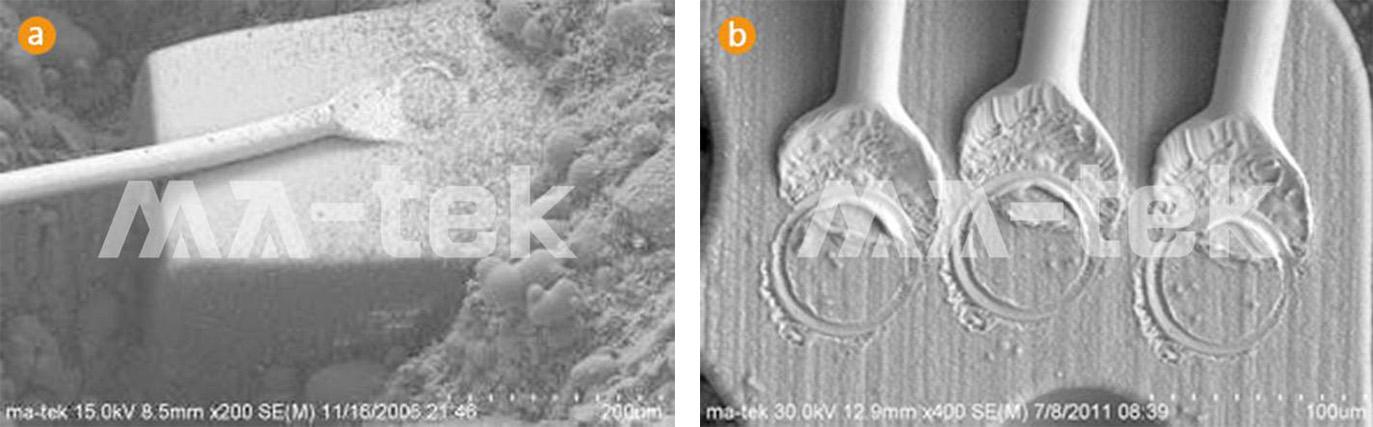
Image | Quality Inspection of Second Bonding Point of Gold Wire
After laser decapsulation, microscopic analysis technology can be used to observe the bonding structure of gold wire connections, such as the quality of the second bond, soldering morphology, and bonding status, to assess packaging reliability.