
HRXRD High-Resolution X-ray Diffraction Analyzer
High-Resolution X-ray Diffraction Analysis Instrument (HRXRD) utilizes the Bragg diffraction phenomenon generated when X-rays irradiate crystal materials. By analyzing the diffraction angles and intensity distribution, the crystal structure and crystallization characteristics of the material can be obtained. MA-tek is equipped withBruker D8 Discover HRXRD systemis a multifunctional high-resolution X-ray diffraction platform, the system not only has basic powder diffraction (Powder XRD) and In addition to the low-angle film diffraction (GID) analysis function, it is also equipped withTriple-Crystal High-Resolution AnalyzerIt can perform high-precision crystallinity analysis and compound composition analysis of single crystal films.
In addition, the system can perform Reciprocal Space Mapping (RSM) analysis to study the lattice arrangement and strain state of epitaxial films, assessing whether the epitaxial layer is under compression or tension. In the analysis of thin film materials, HRXRD can also be combined with X-ray Reflectivity (XRR) technology to measure multilayer or single-layer films.Film thickness, interface roughness, electron density.XRR depth resolution is about 200nm, with a thickness measurement range of 5-200nm, and the surface roughness usually needs to be less than5 nmEven amorphous films can be analyzed.
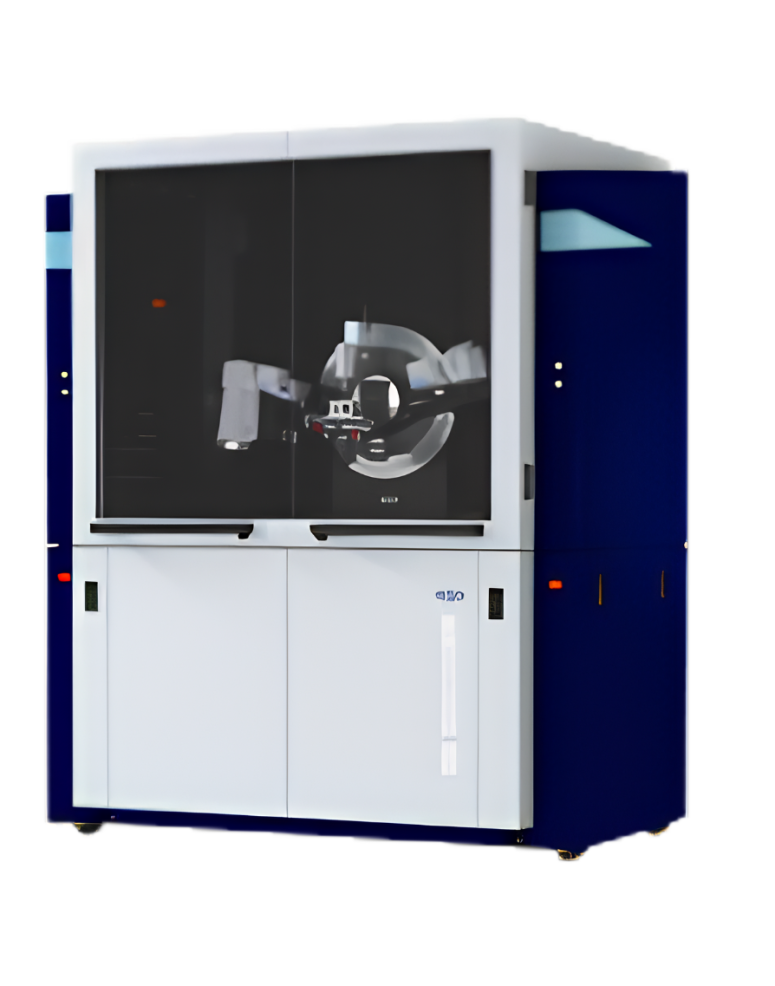
Bruker D8 Discover (HRXRD)
MA-tek configurationBruker D8 Discover high-resolution X-ray diffraction system (HRXRD)It can be used for analyzing crystal structures, thin film crystallinity, and material phases. The system features a high-resolution optical module and multi-axis measurement platform, suitable for semiconductor epitaxy, thin film materials, and crystal structure research.
D8 Discover can be used toHigh-resolution diffraction, Grazing Incidence Diffraction (GID), and Reciprocal Space Mapping (RSM)In the measurement mode, it analyzes the lattice relationships, strain states, and crystallinity between the thin film and the substrate. In addition, the system can also be paired withX-ray Reflectivity (XRR)Measure film thickness, interface roughness, and density.
-
non-destructive measurement
-
can analyze 12-inch samples
-
Can operate in atmospheric conditions.
-
Applicable to bulk, thin films, or powders.
-
Ultra-thin coatings (< 5nm) and 2D materials
-
In-Plane Grazing Incidence Diffraction (IP-GID)
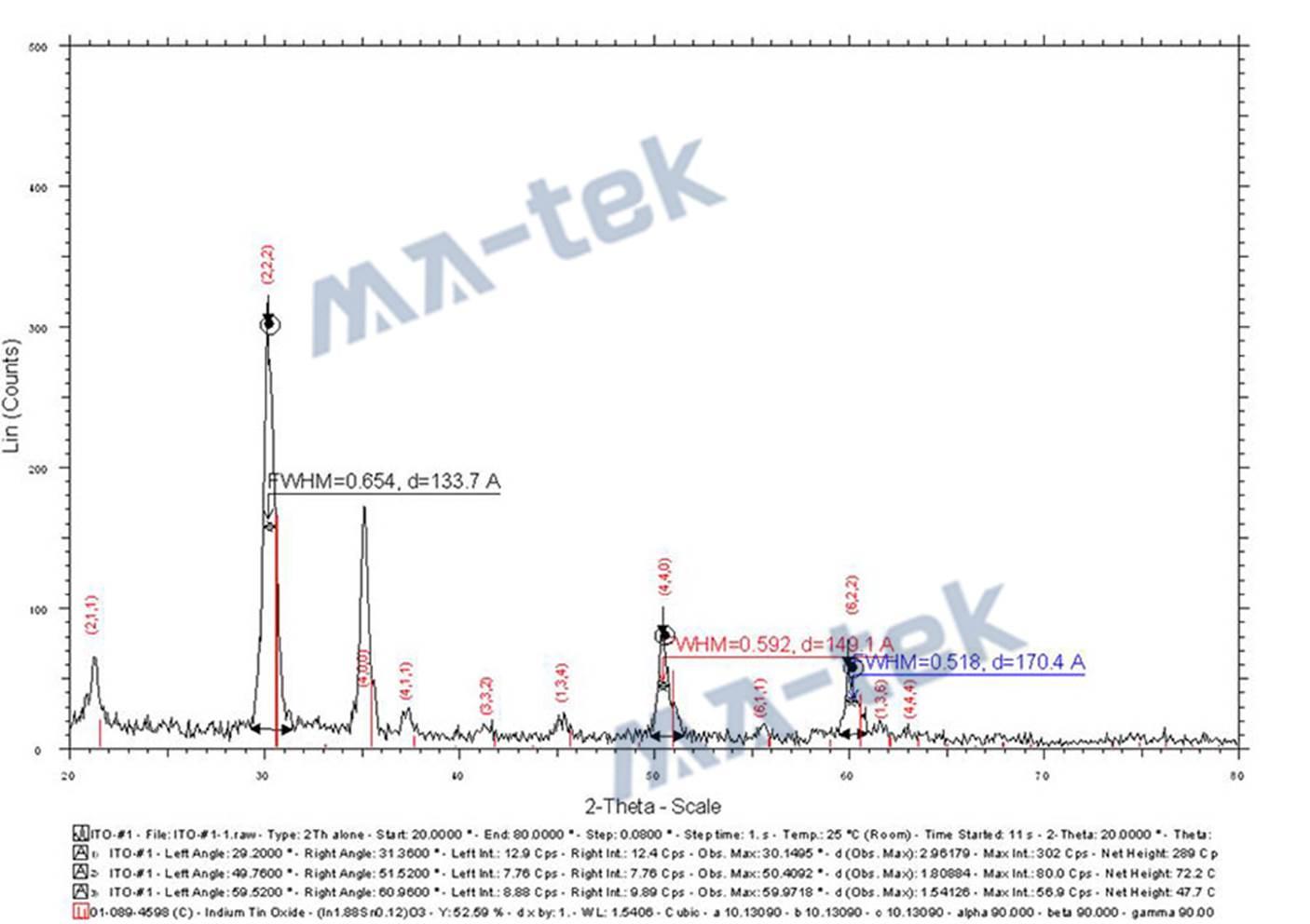
HRXRD / XRD analysis results chart
The diffraction intensity distribution of materials at different diffraction angles analyzes the crystal structure and crystallization characteristics of the materials.The horizontal axis is2θ (2-Theta) diffraction anglethe angle position when X-rays diffract with the crystal planes; the vertical axis isDiffraction Intensity (Intensity / Counts)The diffraction signal intensity at that angle.When X-rays are irradiated onto crystalline materials, different crystal planes will produce diffraction peaks at specific angles. The marked in the figure.(hkl)The indices (such as (222), (440), etc.) represent the corresponding crystal plane orientations. By analyzing the positions and intensities of these diffraction peaks, the crystal structure and phase composition of the material can be determined.
The figure also indicatesFWHM (Full Width at Half Maximum)that is, the Full Width at Half Maximum (FWHM) of the diffraction peaks. FWHM can be used to assess the crystallinity and grain size of the material, with narrower peaks typically indicating better crystallinity and larger grain sizes.In addition, the marked in the figured value (interplanar spacing)indicates the interplanar spacing corresponding to specific crystal planes, which can be used to analyze the lattice constants, strain state, or compositional changes of the material.
-
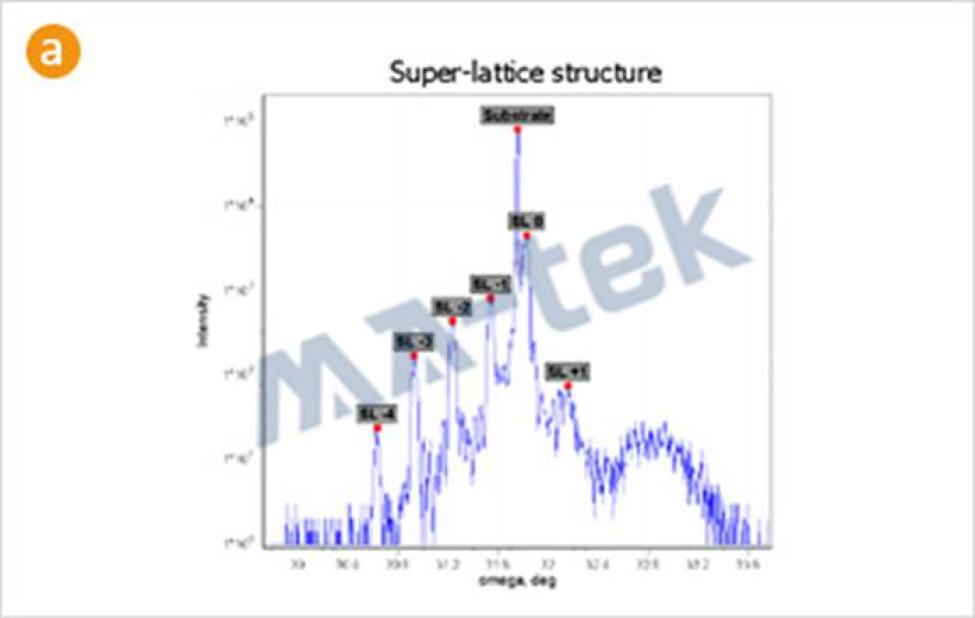
(a) Analysis of GaN epitaxial layer thickness and composition
-
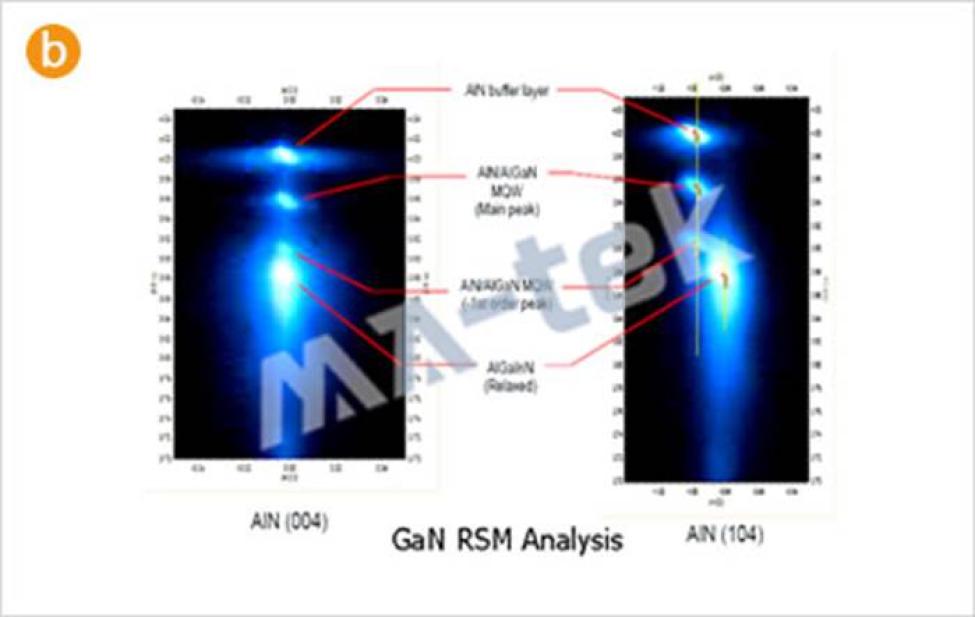
(b) RSM analysis of GaN epitaxial layer
-
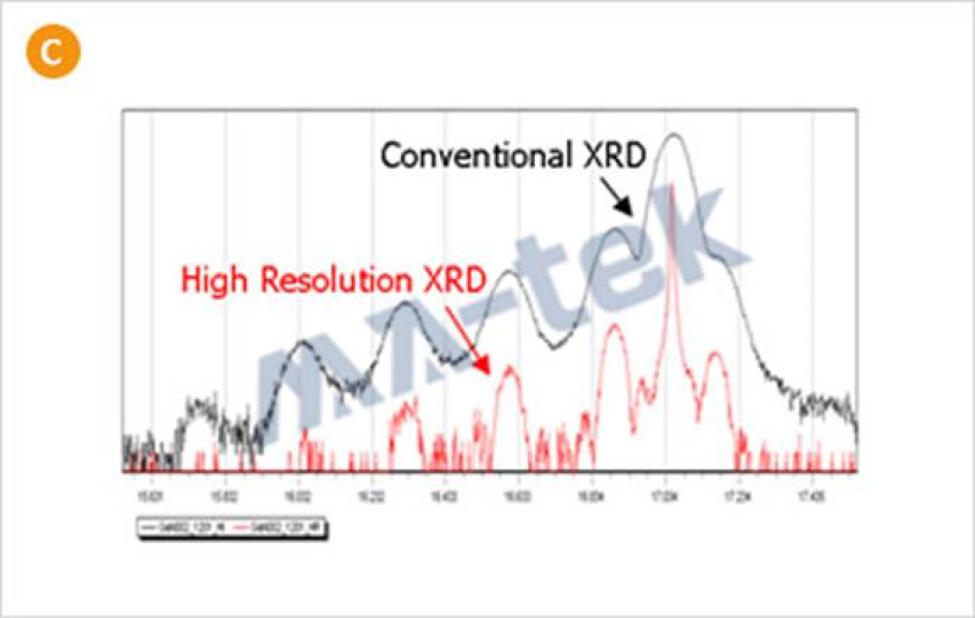
(c) SiGe epitaxial high-resolution spectra
-
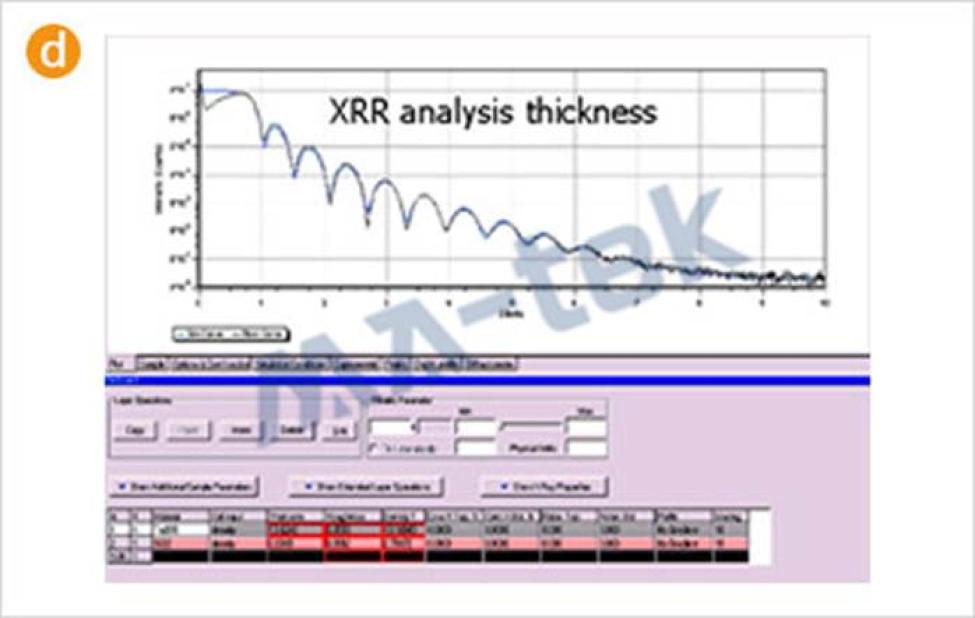
(d) XRR analysis of HfOx film thickness, density, and roughness