ESS Environmental Stress Screening
Environmental Stress Screening (ESS)It is a process method that applies external stresses such as temperature, humidity, and vibration to electronic products, with the aim ofexpose potential defects in advanceexposing potential defects that cannot be detected by functional testing in the normal production process, eliminating early defective products, and ensuring that the final shipped products achieve higher reliability and stability. Unlike traditional functional testing, which can only verify "whether it can work normally," throughEnvironmental Stress ScreeningIt can effectively improve product shipment yield and reduce the number of returns (RMA), allowing products that still have risks in assembly, materials, and component aging to be effectively screened out before shipment, preventing them from entering the market.
The core benefits of Environmental Stress Screening
- Improve product shipment yield:Defective products can be eliminated before mass production delivery, rather than exposing problems only after reaching the customer.
- Reduce RMA and after-sales maintenance costs:By screening out potential defects in advance, it can effectively reduce the burden of returns, repairs, and warranty.
- Enhance market confidence:For high-end products, automotive electronics, industrial control equipment, and aerospace applications, the higher the stability, the more trust can be gained from customers.
- Process Improvement:The defective modes filtered out by ESS can be fed back to process improvements, enhancing long-term production stability.
Environmental Stress Screening is often confused with reliability testing, but their purposes are different. The role of Environmental Stress Screening is more like a "quality gatekeeper," ensuring that each batch of shipped products reaches a stable level.
| Type | Functions and Purposes | Timing |
|---|---|---|
| Environmental Stress Screening | Screening early defective products and reducing initial failure rates | Used in the mass production stage |
| Reliability Testing | Verify whether the product is durable, reliable, and safe. | Used in the product development and certification stage |
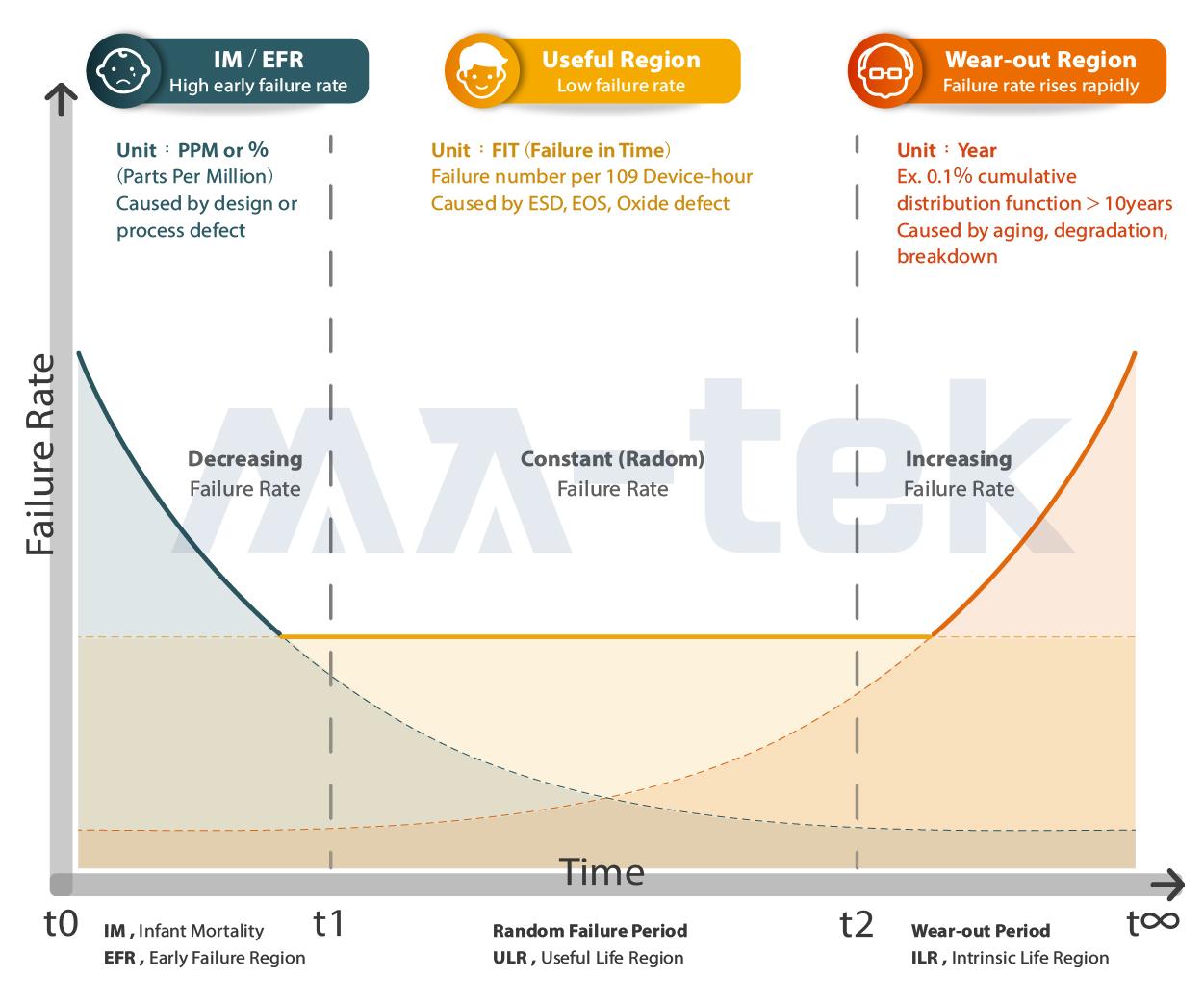
The core value lies inReduce infant mortality
The Bathtub Curve shows that the stage where electronic products are most likely to fail is the "initial usage stage." These failures often stem from:
-
micro-cracks in materials
-
poor solder joints
-
process defects
-
Inconsistent quality of parts
-
Structural assembly instability
General functional testing cannot completely identify these latent issues, therefore throughtemperature cycling, high-temperature burn-in, vibration stressThrough ESS methods, defects can be exposed in advance, reducing market failure rates.
-
Temperature tests
-
High/Low Temperature Test
-
Dry High Temperature Test
-
Temperature Cycling Test
-
-
Outdoor exposure test
-
Rain Test
-
Solar Test
-
-
Special environmental testing
-
Altitude Test
-
Environmental Stress Screening (ESS by Walk-in)
-
-
Corrosion and chemical tests
-
Salt Spray Test
-
Cyclic Salt Spray Test
-
Gas Corrosion Test
-
-
Temperature and humidity combined test
- Temperature and Humidity Combined Test (Damp Heat Test)
-
Dust testing
- Dust Test
After the product enters mass production,Speed, stability, and consistencyis more critical than single test results. Environmental Stress Screening (ESS) is not just about "doing it well," but ratherWhether it is accurate, stable, and whether it can truly identify the problem.This is precisely the key reason why many customers choose MA-tek during the mass production phase.
1. MA-tek is not just a "testing" partner, but an ESS partner that understands production risks.
Many ESS only perform testing processes according to standard conditions, but cannot answer the questions that customers are truly concerned about:"Can such stress really force out potential defective products?"MA-tek has been serving for a long timeAutomotive electronics, industrial control equipment, HPC, communications and advanced packaginghigh-reliability industries, familiar with the risk points that are most easily overlooked in the mass production process, can assist customers in setting based on product structure, material composition, and actual application environment.truly effective ESS stress conditionsrather than superficial testing.
2. Backtracking the process from ESS results truly reduces the long-term failure rate for customers.
the value of ESS lies not only in "how many defective products are screened out," but also inFind out why there are defects.MA-tek has complete capabilities in cross-material analysis, failure analysis, and reliability engineering, allowing the failure modes discovered in ESS to make ESS not just a quality checkpoint, but to becomeThe starting point for process optimization and improvement of mass production stability.。
-
Welding process issues
-
Material selection or batch differences
-
Structural design and stress concentration
-
Abnormal process conditions or equipment parameters
3. Large Walk-in ESS energy supports the true mass production rhythm.
Mass production ESS is most afraid of "measuring beautifully, but not keeping up with shipments," MA-tek configuration.Walk-in level environmental stress screening equipment, capable of handling:
-
Large-sized products
-
Multi-machine batch testing
-
High power, high load operating conditions
Assisting customers in establishing without affecting the mass production schedule.Long-term operational and uninterrupted ESS screening mechanismso that quality and delivery time do not have to be a choice between the two.
4. Familiar with automotive and high reliability customer internal specifications, ESS conditions are set up at once.
For automotive electronics and high-end industrial control products, the real challenge often comes fromCustomer internal specifications are higher than the standard.MA-tek has long-term experience assisting Tier 1 and international manufacturers in executing mass production ESS, familiar with various typesInternal regulations and practical operation details that exceed IPC requirements.to assist customers in completing condition calibration during the introduction of ESS, avoiding repeated adjustments later due to specification discrepancies.
5. ESS is the quality defense line for mass production, MA-tek stands guard at the forefront for you.
In the mass production stage, the cost of any RMA, customer complaint, or recall is far higher than the testing itself. MA-tek, in a third-party professional role, stands atBetween customers and the marketto establish the final line of reliability for the product, preventing potential risks from occurring in the end market and stopping them in the laboratory.