Chat with us, powered by LiveChat

TGA Thermogravimetric Analyzer

Thermogravimetric analyzer (TGA) is a type of thermal analysis technique used to study materials.Thermal stability and compositional changesThe important thermal analysis technique, its principle is toControlled atmosphere and temperature conditionsBelow, the sample is subjected to programmed heating or isothermal heating, while simultaneously measuring the change in sample weight with respect to temperature or time.


When the sample occurs during the heating processevaporation, thermal decomposition, redox reaction, dehydration or pyrolysisWhen the phenomenon occurs, the sample weight will change. By using a precise microbalance to record the weight change in real time, it is possible to obtainThermogravimetric curve (TG curve)and further analyze the mass change behavior of materials at different temperature stages. By relating these weight changes to temperature, the properties of the materials can be determined.pyrolysis temperature, composition ratio, volatile matter content, residue, and thermal stabilityOther important material properties, in addition, TGA can also be measured in different atmospheres (such as nitrogen, air, or oxygen) to study the thermal reaction behavior of materials under different environmental conditions.

Technical Features
Can be combined with other thermal analysis techniques.
TGA is often used in conjunction with DSC, TMA, or mass spectrometry analysis, allowing for the simultaneous acquisition of information on weight changes, phase transitions, and gas release, providing a more comprehensive analysis of the thermal properties of materials.
Applicable to various material systems
Thermal characteristic analysis applicable to polymer materials, inorganic materials, nanomaterials, composite materials, and various chemical materials.
Can control different atmospheric conditions
TGA can be analyzed in inert gases (such as nitrogen) or oxidative atmospheres (such as air, oxygen) to study the thermal decomposition, oxidation, or combustion behavior of materials in different environments.
Can perform program heating and isothermal analysis
The instrument can set different heating rates or isothermal conditions to observe the weight changes of materials within a specific temperature range, providing complete information on thermal reactions and thermal stability.
High sensitivity weight change measurement
TGA measures the extremely small weight changes of samples during the heating process through a high-precision microbalance, allowing for precise analysis of the decomposition or volatilization behavior of materials at different temperature stages.
Analysis Application
Research on Oxidation and Decomposition Reactions
Through different atmospheric conditions, the oxidation, combustion, or thermal cracking reactions of materials can be observed.
Polymer and Composite Material Analysis
Commonly used for studying the thermal decomposition and compositional structure of polymers, plastics, and composite materials.
Analysis of Volatile Components and Moisture Content
Can analyze the content of solvents, moisture, or other volatile substances in samples.
Sample composition ratio analysis
Through the weight loss ratio, the proportions of different components in the sample can be estimated, such as the content of fillers or additives.
Material Thermal Stability Analysis
Evaluate the decomposition temperature and heat resistance of materials at different temperatures.
Common measurement conditions for TGA
Project Description
temperature range approximately room temperature ~ 1000 °C
heating rate 1–50 °C/min
atmosphere nitrogen, air, oxygen
Analyzable materials polymers, inorganic materials, and composite materials
Application examples
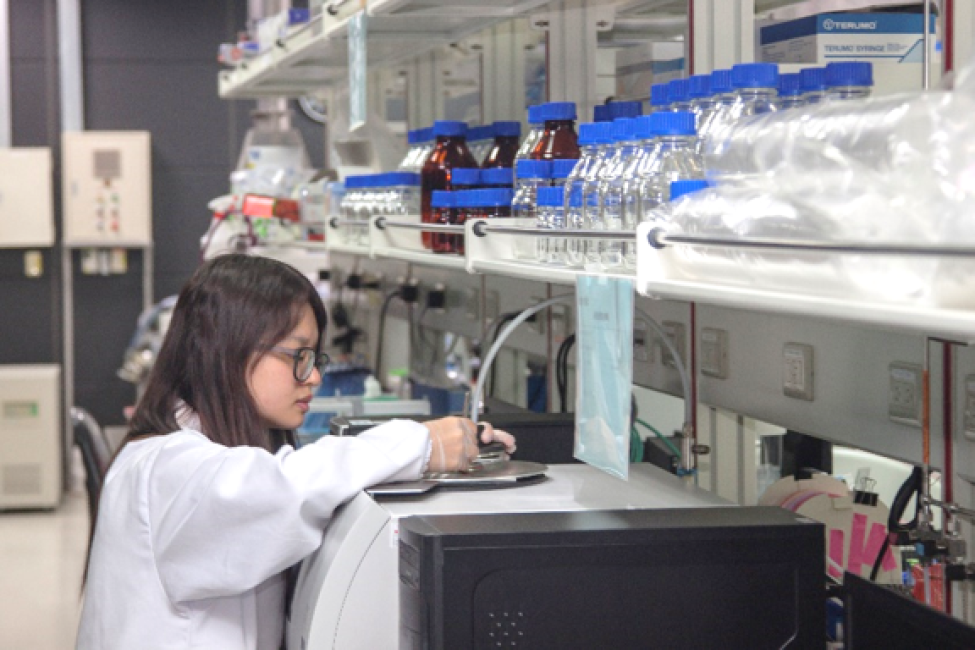
  • Technical personnel practical operation

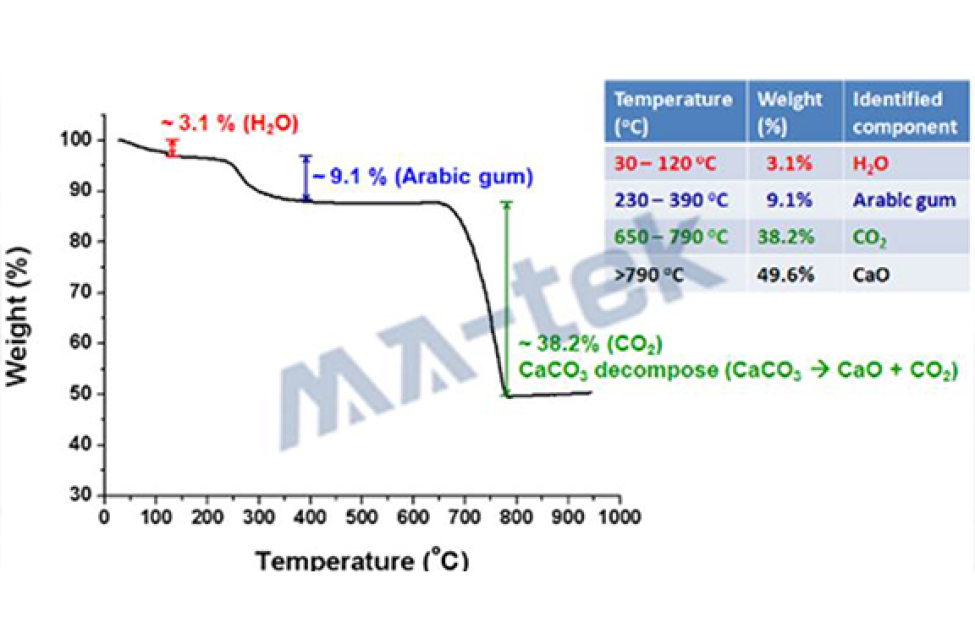
  • Thermogravimetric analysis diagram of surface-modified nano calcium carbonate
Types of machines

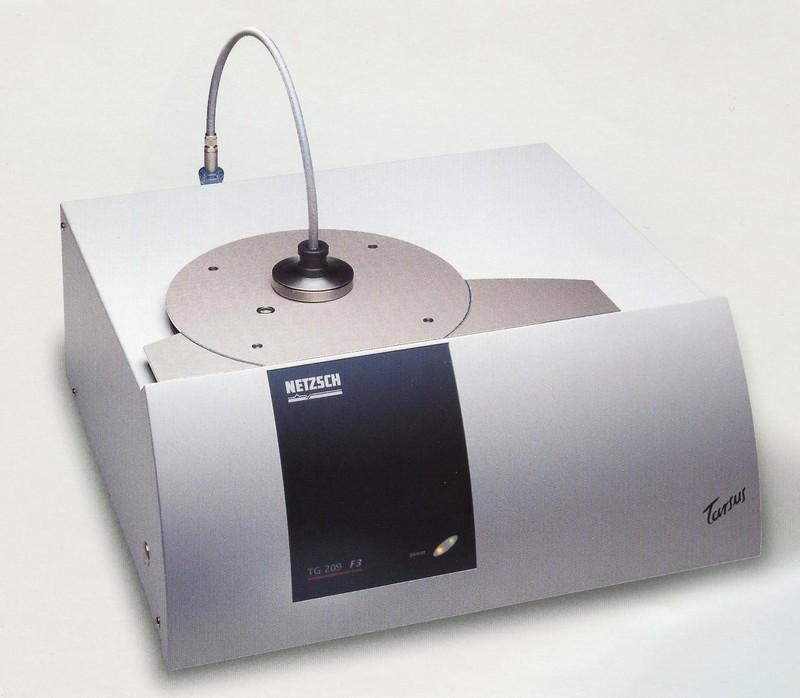
Netzsch TG 209 F3 Tarsus

NETZSCHTG 209 F3 Tarsusfor high precisionThermogravimetric Analyzer (TGA)can measure materials under heating or specific atmospheric conditionsweight changesused to study the thermal stability, decomposition behavior, and composition ratios of materials.

The instrument uses a high-sensitivity microbalance and a precise temperature control system to record in real-time the changes in sample weight with temperature or time under programmed heating or isothermal conditions. When the sample due toevaporation, dehydration, thermal decomposition, oxidation or decomposition reactionsWhen weight changes occur, the material characteristics can be analyzed through the thermogravimetric curve (TG curve).

NETZSCH TG 209 F3 has good temperature control and measurement stability, and can be analyzed under different atmospheric conditions (such as nitrogen, air, or oxygen), widely used inpolymers, nanomaterials, inorganic materials, and compositesResearch on thermal characteristics.


 
Contact
Contact Window
Taiwan Laboratory

Mr. Zhong

Ext. +886-3-6116678 ext:3275

Privacy Preference Center

We use cookies to allow our website to function properly, personalize content and advertisements, provide social media features, and analyze traffic. We also share information about your usage of our website with social media, advertising, and analytics partners.

View Privacy Policy

Manage Consent Settings

Necessary Cookies

Always Enabled

The operation of the website relies on these cookies, and you cannot disable them in the system. These cookies are usually set based on the actions you take (i.e., service requests), such as setting privacy preferences, logging in, or filling out forms. You can configure your browser to block or prompt you about these cookies, but this may result in certain website functionalities not working.