[Technology News] MA-tek's Hsieh Yong-Fen serves as the best assistant to protect the national treasure, adhering to the principle of "where the customers are, there is the service."
Amid the current geopolitical issues, countries are eager to develop their own semiconductor manufacturing industries, transforming the situation where Taiwan supplied semiconductors to the world into a global business. How has MA-tek, as a major player in semiconductor testing, adapted to this trend and delivered impressive financial reports?
Steady and resilient, MA-tek demonstrates toughness in adversity.
Rewinding to 2018, before the pandemic, when the US-China trade war broke out, TSMC stopped supplying high-end chips to China. As a result, China urgently needed strong support from third-party testing companies like MA-tek to rapidly develop its semiconductor industry and build new wafer fabs. Additionally, in the Japanese market, there was also significant demand from wafer fab equipment and material suppliers. MA-tek proactively laid out plans and tailored solutions for customers, successfully securing these businesses.
When asked about the impact of global semiconductor inventory levels on the testing industry, MA-tek Chairman Hsieh Yong-Fen stated that the number of projects from fabless IC design companies has decreased, leading to fewer new product introductions (NPI), which directly impacts reliability analysis and electrostatic analysis testing firms. However, MA-tek is not affected by IC design companies; looking at the significant revenue growth in the first quarter of this year, the main reason for profit comes from the demand for material analysis (MA) from wafer fabs.
Aiming at the central Japan market, focusing on localized services.
At the beginning, MA-tek targeted the central Japan market and established a laboratory in Nagoya to serve the development of silicon carbide semiconductors for major Japanese automotive manufacturers. After building a good reputation, it also gained support from local semiconductor equipment and material suppliers, and the laboratory is currently operating at full capacity. Moreover, recently, major semiconductor companies from various countries have been making significant investments in Japan. In June of this year, MA-tek also established its second laboratory in Japan, located in Kumamoto Prefecture in central Kyushu, seizing the opportunity for the revival of the Japanese semiconductor industry. In addition to local employment counseling and staffing services, the Kumamoto laboratory also has some engineers from Taiwan dispatched to support the operations.
Not worried about competitors overtaking in the curve, whether it's MA-tek or the entire Taiwan semiconductor industry.
Since MA-tek's material analysis mainly focuses on wafer manufacturing customers, after the advanced processes gradually enter 3nm and 2nm, Hsieh Yong-fen believes that it will still be beneficial for MA-tek's operations. The reason is that as long as customers continue to have development needs, they will require MA-tek's testing services. In addition to advanced processes, the development of various mature processes will also be an important operational momentum for MA-tek. For example, in the context of various countries accelerating the development of electric vehicles, the chips used in electric vehicles are mostly produced using mature processes, which will represent a considerable testing market.
As for whether she is worried about competitors overtaking them, or even major clients starting to conduct testing services themselves, turning from clients into competitors, HwaCom's Xie Yongfen emphasized that as long as they continue to widen the gap with competitors, there is no need to fear being caught up. Additionally, Xie Yongfen does not believe that major clients will jump in to become competitors of MA-tek. "Because the need for outsourcing means that MA-tek can do it better than they can themselves; and jumping in would mean competing with MA-tek, which does not seem to have a niche."
In response to testing demands, seeking the most suitable candidates.
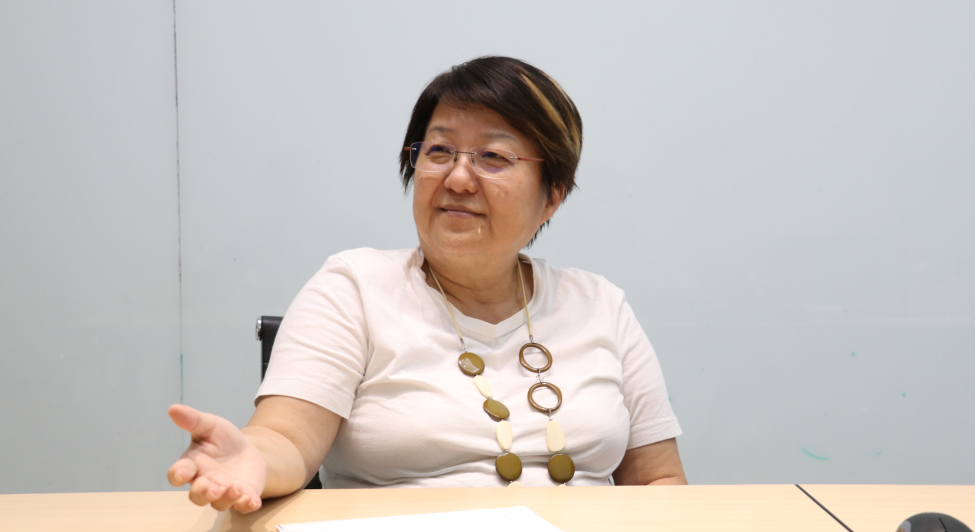
When talking about the issue of talent shortages in the domestic semiconductor industry, Hsieh Yong-fen jokingly said that MA-tek never competes with customers for talent, so there is no problem of talent shortages. MA-tek strongly supports and collaborates with domestic colleges and universities on industry-academia cooperation programs, absorbing new knowledge through advanced research reports from academic institutions, allowing MA-tek to prepare in advance for testing technologies.
Apply big data analysis to quickly understand customer purchasing thoughts.
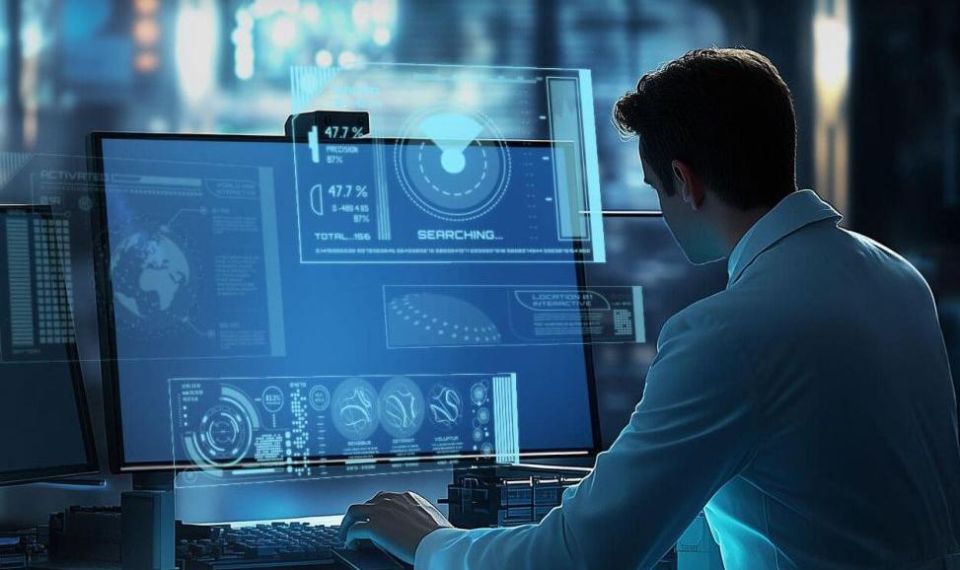
Regarding the recent hottest topic of artificial intelligence (AI), Hsieh Yong-Fen stated that it can indeed help in the development of MA-tek. She emphasized that through the development of artificial intelligence, she hopes that in the future, MA-tek's information systems can quickly analyze customer behavior, establish a big data database, and allow the company to accurately develop its business. For example, with one-click search, they can find out the job positions of buyers, what types of products they frequently purchase, the types of industries of the suppliers, and even understand the purchasing mindset of customers. This way, MA-tek can immediately proceed with the next step of planning and seize the opportunity!
(Image source: Technology News)