
Insight into minute defects, safeguarding excellent quality - voids are no longer a problem, vacuum reflow soldering creates high reliability in SMT soldering quality.
Preface
As the functions of electronic products continue to strengthen, the requirements for power processing and thermal management are also increasing. High-power components such as IGBT, MOSFET, LED, and RF power modules are widely used in various high-performance devices. The packages used, such as BGA, QFN, LGA, CSP, PQFN, and DFN, although having advantages like small size and high efficiency, also pose stringent challenges to SMT soldering quality.
For these components, soldering quality not only relates to electrical conductivity but also directly affects heat dissipation efficiency and the overall reliability of the system. Voids in solder joints have become a key factor in hidden failures. Therefore, Vacuum Reflow Oven technology has become the core means to solve this problem, helping you comprehensively improve product yield and stability.
What is a solder joint void?
Voids in solder joints refer to tiny gaps formed inside the solder joint due to gases not being fully released. These gaps typically occur during the reflow soldering process, especially during the solder melting phase, when gases released from flux or other volatile substances cannot be smoothly expelled, resulting in voids within the solder joint.
The Invisible Dangers of Voids in Solder Joints
The tiny voids in solder joints may not show harm initially, but as usage time increases, they quietly erode the performance and lifespan of electronic products, causing unpredictable failures. The potential risks of voids are as follows:
- Reduce electrical connection reliability: Voids reduce the actual conductive area, increase resistance, and may lead to poor signal transmission or even open circuit failure.
- Impact on mechanical strength: Voids affect the structural integrity of solder joints, making them more prone to cracking under vibration, impact, or thermal stress.
- Deterioration of heat dissipation efficiency: Voids hinder the effective conduction of heat, affecting the thermal conductivity of components, leading to localized overheating, accelerated aging, and even burning out, especially critical in high-power applications.
- Increased reliability failure risk: With prolonged changes in environmental temperature, cracks are likely to develop around voids, ultimately leading to the cracking of solder joints and loss of product functionality.
Vacuum Reflow Soldering Technology - The Gatekeeper of Component Reliability
Vacuum reflow soldering introduces a vacuum environment during the soldering process, allowing bubbles generated when the solder melts to effectively escape, thereby significantly reducing the void rate. Its technical features include:
- Pressure difference promotes bubble escape: The pressure difference inside and outside the solder joint enhances the buoyancy of the bubbles, making them easier to discharge.
- Reduce oxidation reactions: Vacuum combined with reducing gases (such as hydrogen) can reduce solder oxidation.
- Enhancing solder fluidity: The vacuum environment reduces solder flow resistance, facilitating bubble movement.
- The void rate has significantly decreased: the single point void rate can be lower than 1%, and the overall board void rate is lower than 5%.
Due to the vacuum reflow soldering technology, which applies a vacuum environment during the soldering process, void formation can be significantly reduced, greatly improving the quality of solder joint adhesion. MA-tek provides advanced SMT vacuum reflow soldering services, specifically designed for high-power and high-reliability electronic components, effectively reducing void rates and enhancing solder joint reliability.
Conclusion
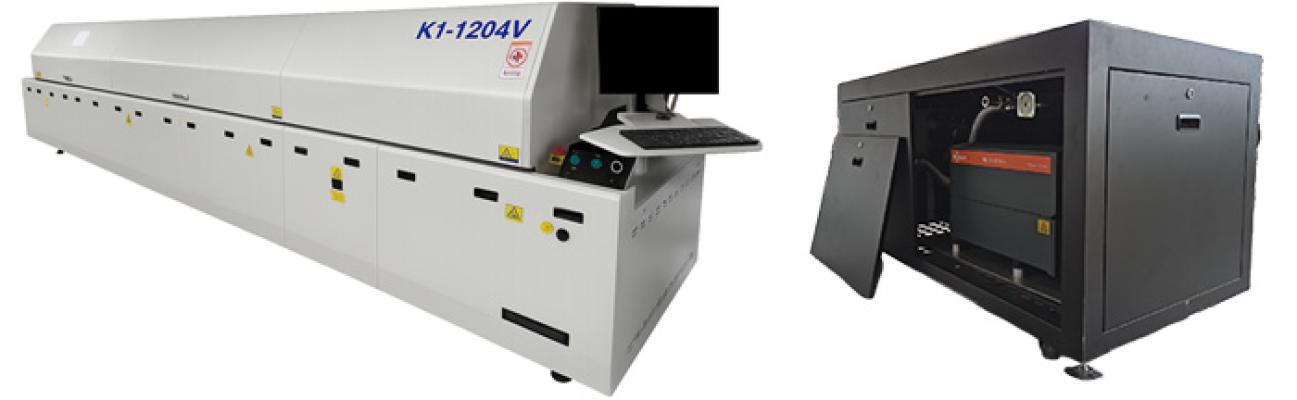
In MA-tek's rich experience with vacuum reflow soldering, the void rate has effectively been reduced from over 30% to less than 5%, as shown in the test results below. MA-tek has always adhered to providing high-quality analysis services and continues to be the best R&D partner for customers.
| SMT non-vacuum reflow soldering (Void>30%) | SMT vacuum reflow soldering (Void<5%) |
|---|---|
__25K12y0kc3.png "01 (2)") |
__25K12kjDN2.png "02 (1)") |
__25K12yq1VV.png "03 (1)") |
__25K12WxFLe.png "04 (1)") |
__25K12FRl6H.png "05 (1)") |
__25K12OfFRG.png "06 (1)") |
Contact Window:
Mr. Wu, Shanghai Laboratory
Tel: +86-21-50793616 ext.: 85742
Mobile: 187-0171-7390
Email: rasys_sh@ma-tek.com