K-kit Technology Application Seminar | K-kit Makes Exosome Research No Longer Take a Detour
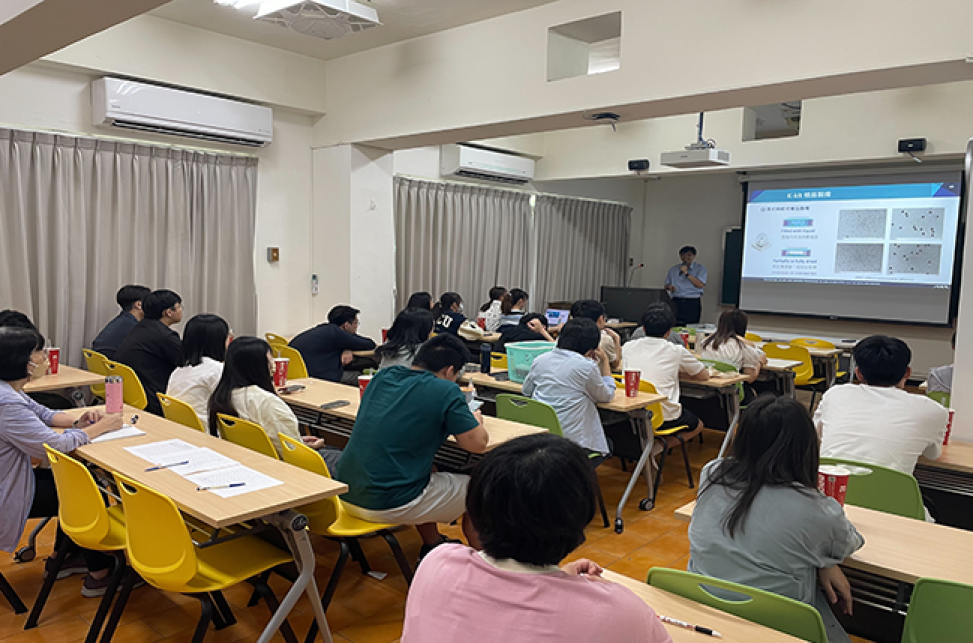
The K-kit technology application seminar, co-hosted by MA-tek and Berson Biotech, was successfully held on the afternoon of June 26 at the Practice Building of the Yangming Campus of National Yang Ming Chiao Tung University in Beitou. This event was organized by Yang Ming Chiao Tung University and was limited to faculty and students within the university. The response on-site was enthusiastic, with active interactions, fully demonstrating the attendees' high interest in the K-kit product.
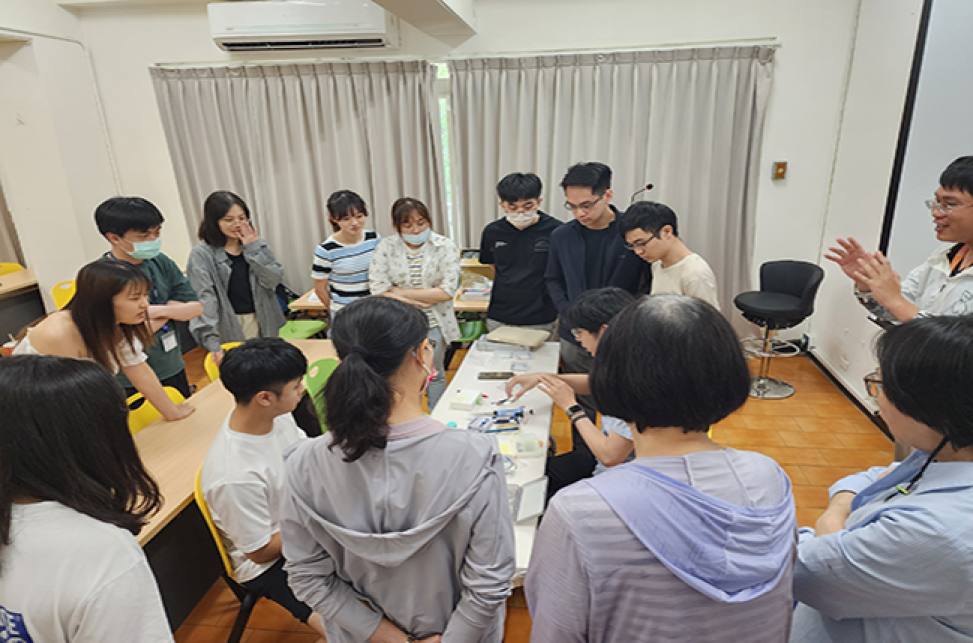
During the seminar, Director Chen Hong-ren of MA-tek's R&D Center provided an in-depth introduction to the core technology and application advantages of the K-kit. At the same time, he showcased the K-kit sample preparation process using multiple biological samples provided by professors from the university, and directly utilized the university's transmission electron microscope (TEM) for real-time imaging observation, demonstrating the convenience and practicality of the K-kit. After the presentation, during the interaction time, the attending professors actively discussed and proposed several forward-looking application research ideas, including: research on the interaction interface of neuronal synapses, observation of the dynamic behavior of cell pseudopodia, and observation of protein binding mechanisms. These innovative ideas indicate that the K-kit has a high potential to promote research and development in the biomedical field.
Director Chen pointed out in his speech that the K-kit has a unique monolithic structural design, making it the only micro liquid pool chip on the market that can simultaneously achieve multiple loadings and wet negative staining, particularly suitable for the observation of low-contrast biological samples and immunoelectron microscopy research. He also shared practical application cases of the K-kit in this area, including images of exosomes observed using two different wet negative staining techniques, as well as high-resolution observation results of platelet α granules labeled with gold nanoparticles in academic literature (Reference: Appl. Sci. 2020, 10, 4946), fully demonstrating the K-kit's outstanding performance and technical potential in biomedical sample imaging.
In recent years, exosomes have attracted significant attention in fields such as disease diagnosis, drug delivery, regenerative medicine, anti-aging and beauty applications, vaccines, and immunotherapy, becoming a research hotspot in the biomedical and nanotechnology sectors. Director Chen particularly emphasized that the K-kit can complete the entire process of preparing exosome solution samples to machine observation within one hour, making it the fastest and most convenient electron microscopy detection solution currently available in the industry.
The K-kit has obvious advantages such as ease of operation, rapid detection, and wide applicability, making it the only tool on the current market that meets complex testing needs while spanning academic and industrial applications in nano liquid analysis. In nano-medical applications, whether in new drug development, biomedical research, disease detection, or blood analysis, the K-kit can quickly provide concrete and intuitive liquid sample TEM images, significantly enhancing the efficiency and feasibility of medical diagnosis and scientific research.