
Next-generation energy storage technology: advanced lithium-sulfur batteries
Advanced lithium-sulfur batteries
Associate Professor Zhong Shengheng's team
National Cheng Kung University, Department of Materials Science and Engineering
-
Preface
Since 1990, the first and second generations of lithium-ion batteries have achieved the reversible intercalation and deintercalation of lithium ions between layered oxide cathodes and graphite anodes through intercalation reactions, effectively realizing the long-cycle reversible charge and discharge reactions of lithium-ion batteries. This technology allows lithium-ion batteries to achieve a higher energy density of about 100-350 W·h Kg compared to other commercial rechargeable batteries.-1and maintain an extremely high long cycle capability of over 1,000 cycles during battery use, while exhibiting a very low self-discharge effect of only -5% per month when the battery is at rest. Due to the significantly higher energy density of lithium-ion batteries compared to rechargeable batteries of the same period, as well as their long cycle life and shelf life, lithium-ion batteries have become the main force in the rapidly growing large energy storage market over the next 30 years. Continuous research and modification during this period have brought the energy storage capacity of the corresponding electrode active materials very close to 200-300 mA·h g.-1The theoretical limit of energy density is gradually facing an insurmountable barrier, as the long-term optimization of technological advantages encounters difficulties. On the other hand, in terms of the composition cost of batteries, the cost of cathode materials occupies the highest share and continues to rise, which simultaneously drives up the material production and battery manufacturing costs of lithium-ion batteries. Accordingly, under the dual market pressure of limited performance and rising costs, the energy density growth rate of the lithium-ion battery market has dropped from 7% per year to only 2%. This research and development challenge indicates that further improving the performance of lithium-ion batteries and reducing costs will be key to achieving sustainable development in response to the growing demand for energy storage.
To achieve the key development of energy storage technology, the next-generation battery modules in the energy storage market and battery industry mainly focus on the following two directions as the blueprint for future development. In terms of the reaction mechanism of batteries, the development of electrochemical batteries plans to utilize the conversion-type electrochemical reactions of electrochemical batteries to fully convert the chemical energy of materials into electrical energy, while achieving highly reversible energy storage and discharge. By carefully selecting the active material for the electrochemical reaction, it is also possible to achieve high capacity and capacity utilization, thereby giving the battery excellent energy density and market competitiveness. Actively promoting the research and development of solid-state electrolytes in the composition of batteries fully leverages their excellent mechanical, physical, and electrochemical stability to achieve high physicochemical stability, high safety, and long-cycle electrochemical stability in battery reactions. These two main development directions for next-generation battery modules aim to enhance the energy storage capacity and stability of batteries from multiple aspects to achieve high energy density rechargeable batteries, striving to realize a new generation of energy storage batteries with high energy density reaching 300-500 W·h Kg.-1 and 700-800 W·h L-1[4-9], the realization of these battery performances will enable electric vehicles to surpass traditional gasoline and diesel vehicles in driving range for the first time, while also promising to further reduce the core cost of batteries.
lithium-ion battery
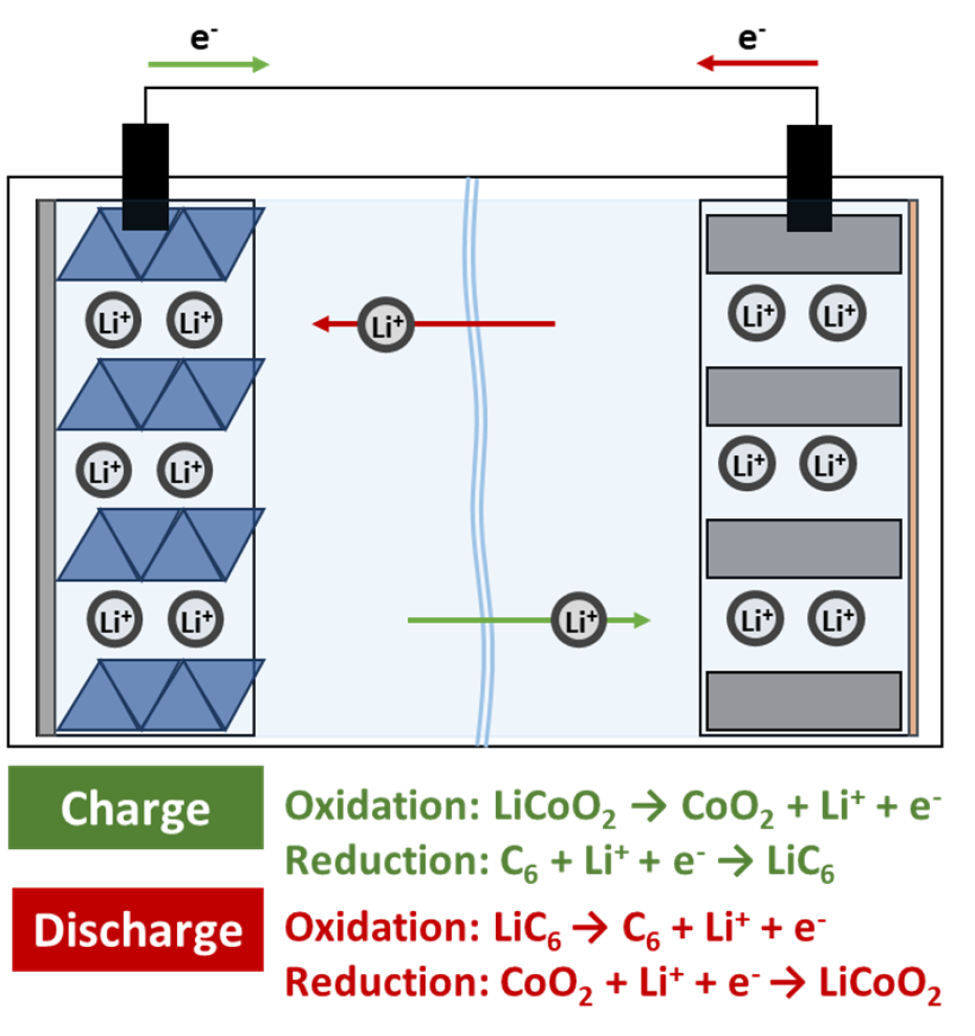
Figure 1. Schematic diagram of lithium-ion battery and its intercalation-type electrode redox reactions during energy storage and discharge.
The high energy density and excellent cycle and self-discharge stability of lithium-ion batteries stem from the lithium-ion intercalation and deintercalation reactions proposed by Stanley Whittingham. This lithium-ion intercalation battery reaction allows lithium ions in the internal circuit to move rapidly through the electrolyte, enabling the external electrons to achieve fast charging and discharging. The lithium ions in the internal circuit can also be stably stored in the layered structure or channel structure of the electrode active material, allowing the external electrons to reach low self-discharge, and the design of the electrode active material structure achieves large capacity storage. Here, by combining the positive electrode active material developed by John Goodenough and the carbon-containing negative electrode material by Akira Yoshino, the complete technical system suppresses potential instability issues related to lithium dendrite growth and successfully avoided the use of lithium metal negative electrodes and the associated safety concerns in the early commercialization of lithium-ion batteries.
The energy storage and discharge functions of lithium-ion batteries are based on intercalation-type electrode redox reactions: the charging process is driven by energy provided by an external system, causing the flow of electrons from the positive electrode to the negative electrode, which in turn drives lithium ions to migrate from the positive electrode to the negative electrode to compensate for charge differences, completing the storage of lithium ions in the carbon negative electrode and the overall energy storage of the battery; the discharging process is driven by the working potential difference of external devices, causing the flow of electrons, which subsequently drives lithium ions inside the battery to leave the temporarily stored negative electrode and return to the crystal structure of the active material in their original positive electrode, with the reaction process accompanied by the release of energy (as shown in Figure 1) [1-3].
The basic composition core of lithium-ion batteries includes the positive and negative electrodes and a separator membrane soaked in electrolyte between them. Theoretically, the existing commercial positive and negative electrodes are composed of corresponding active materials, conductive materials, and polymer binders, which are attached to metal current collectors. The active materials of the positive and negative electrodes are responsible for two key performance aspects: high capacity and stability, as well as charge and discharge efficiency and reversibility. Among them, the active material of the positive electrode is the main supplier of lithium ions and requires a high standard redox potential. Common positive electrode materials for lithium-ion batteries are metal oxides, such as the highly efficient LiCoO.2Potential high voltage LiMnO2、LiFePO4high-energy-density LiNixMnyCozO2The high positive electrode potential is maintained by the interaction between oxygen atoms and transition metals. The active material of the negative electrode needs to have a high lithium ion accommodation capacity and must possess a low standard redox potential, which matches with the positive electrode to achieve a high operating voltage difference and realize the advantages of high energy density. Common negative electrode materials are carbon-based and silicon-based materials and their derivatives. Conductive materials are added to increase the overall electronic conductivity of the electrode, reduce ohmic polarization to achieve high electrochemical utilization and fast charge-discharge. Binders are added to connect conductive materials to construct conductive pathways, wrapping them around relatively non-conductive active materials and then attaching them to the metal current collector, ensuring the consistency of the electrode structure and the integrity of the conductive network. The current collector is made of different metal foils according to the characteristics of the positive and negative electrodes, and the current collector as the electrode substrate helps to stabilize the battery's conductivity and potential. The separator is a polymer porous film placed between the two electrodes to prevent their physical contact and avoid short circuits, and it can slightly block the rapid penetration of lithium dendrites; the porous separator must also be fully wetted by the electrolyte to maintain lithium ion conduction and ionic conductivity within the battery. Common lithium-ion battery separators are mostly composed of polyethylene, polypropylene, and polyvinylidene fluoride, among which absorb cyclic and linear carbonate electrolytes containing lithium salts.
Electrochemical lithium-sulfur battery
The electrochemical lithium-sulfur battery saw a significant increase in energy storage practicality and stability after Linda Zazar introduced porous carbon as the active material substrate for the cathode in 2009, and Arumugam Manthiram introduced porous carbon to create the battery composition in 2014. This has made it a key focus for the next generation of development to maintain the advantages of commercial lithium-ion batteries. The lithium-sulfur battery can achieve a high theoretical capacity of 1675 mA·h g in a battery composition similar to that of lithium-ion batteries.-1Low-cost sulfur as the electrochemical positive electrode is a leader in the capacity among existing solid-state electrodes, and when combined with a lithium metal negative electrode with the lowest standard redox potential, the electrochemical lithium-sulfur battery can achieve 2600 W·h Kg.-1the excellent theoretical energy density. Based on this electrochemical fundamental characteristic, the lithium-sulfur battery system has the opportunity to achieve a high specific energy density of 300-500 W·h/kg with low-cost, low-toxicity, and abundant active materials.-1 and 700 W·h L-1[8,10-14]。
The remarkable characteristics of lithium-sulfur batteries are based on their unique conversion-type electrode redox reactions: during the discharge process, the sulfur cathode chemically reacts with lithium ions in the electrolyte to form lithium sulfide, involving the conversion of two lithium ions, which is equivalent to the transfer of two electrons in the external circuit; combined with the low atomic weight of sulfur, this achieves a tenfold increase in electrode discharge capacity. Furthermore, the conversion battery reaction of the sulfur electrode is not limited by the oxide structure of the active materials in current lithium-ion battery cathodes, allowing for complete electrochemical utilization and a fully reversible reaction; therefore, during the energy storage process, lithium-sulfur batteries can be charged by an external system to oxidize lithium sulfide back to sulfur, accompanied by two lithium ions and two electrons returning to the anode through internal and external circuits (as shown in Figure 2) [10-12].
The basic composition core of lithium-sulfur batteries is the same as that of commercial lithium-ion batteries, both conforming to the basic structure of galvanic cell discharge and electrolytic cell charging. The battery includes two electrodes (positive and negative) and a separator immersed in the electrolyte. However, the conversion battery reaction of lithium-sulfur batteries, along with the physicochemical characteristics of its sulfur cathode and redox reactions, is quite unique (as shown in Figure 3) [10-12]. Although the sulfur cathode of lithium-sulfur batteries has the highest theoretical capacity among solid-state electrode active materials, it also has an extremely high resistance value reaching 10.−30S cm−1The low electrochemical utilization of the active material and the low reversible capacity during the cycling process (as shown in Figure 3a) are caused by this. When solid sulfur (S) in the cathode...8) and the lithium ions in the electrolyte will gradually form liquid polysulfides (Li2Sx(4 ≤ x ≤ 8), the liquid polysulfides can easily dissolve from the sulfur cathode due to their high solubility in the electrolyte, and through the irreversible diffusion in the battery, when they diffuse to the lithium anode, they can further contaminate the lithium metal to form insulating deposits of lithium sulfide. This series of processes involving the generation, dissolution, diffusion, and contamination of polysulfides leads to irreversible loss of active materials and degradation of the electrodes, which is the main reason for the rapid capacity fading and short cycle life of lithium-sulfur batteries (as shown in Figure 3b). Some liquid polysulfides remaining in the cathode will form solid lithium sulfide during continued discharge reactions, and this insulating discharge product also has low conductivity of only 10.−14S cm−1causing high internal resistance, which leads to severe polarization phenomena in the charging reaction, limiting its reversible charging reaction (as shown in Figure 3c). In the subsequent charging reaction, solid lithium sulfide will oxidize into liquid polysulfides and solid sulfur. However, the liquid polysulfides lost during the charging process will form higher-order polysulfides or even sulfur based on the oxidation reaction during the charging reaction. Meanwhile, the lost liquid polysulfides will also undergo reduction reactions at the lithium metal anode by accepting lithium ions to produce lower-order polysulfides or lithium sulfide. The conflict between the electrochemical reactions and chemical reactions results in low Coulombic efficiency or causes battery overcharge failure (as shown in Figure 3d). Furthermore, the conversion battery reaction alleviates the limitations of the active material structure on capacity and its utilization rate, also causing the active material to face repeated structural changes, considering the sulfur density is 2.07 g cm.-3; and the density of lithium sulfide is 1.66 g cm-3The sulfur in the cathode will undergo an 80% volume change during each charging and discharging process, accompanied by solid-liquid phase changes. These volume and state changes will gradually damage the electrode structure during repeated cycling, leading to the failure of the cathode (as shown in Figure 3) [12-15].
-
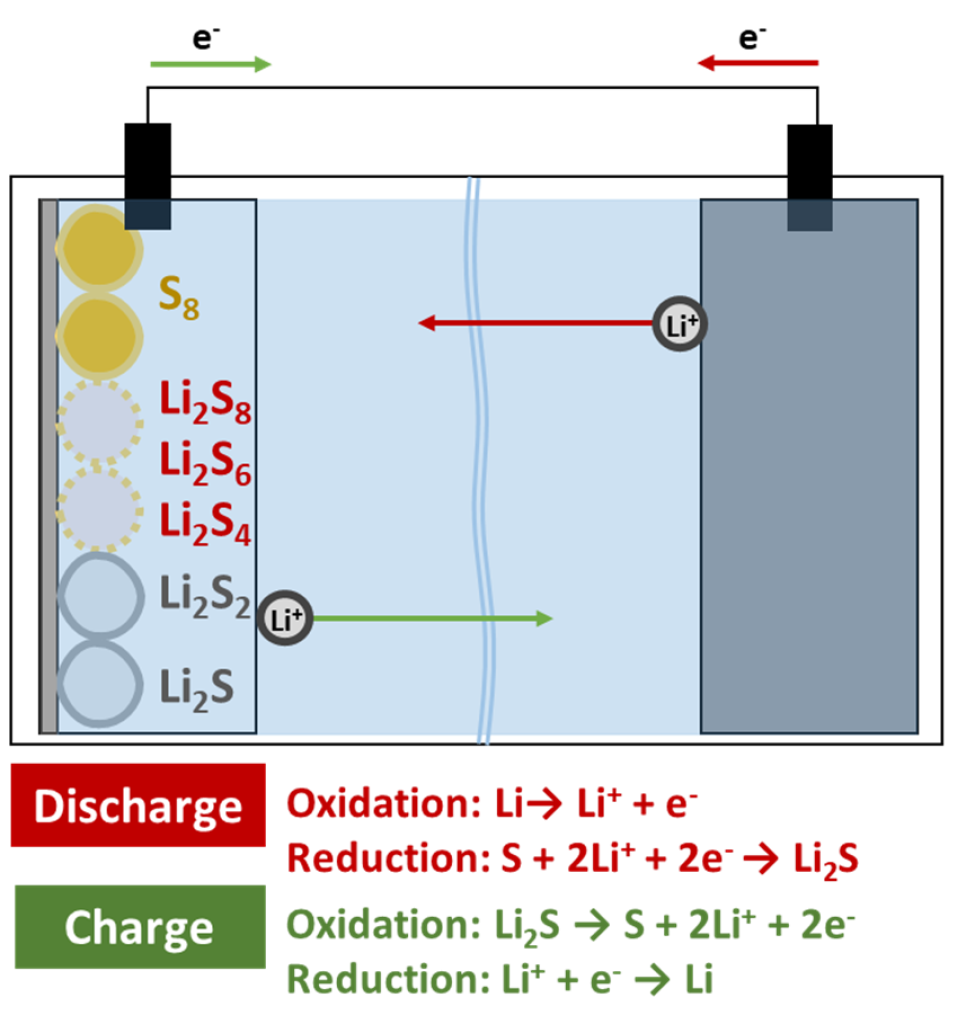
Figure 2. Schematic diagram of lithium-sulfur battery and its conversion-type electrode redox reactions during energy storage and discharge.
-
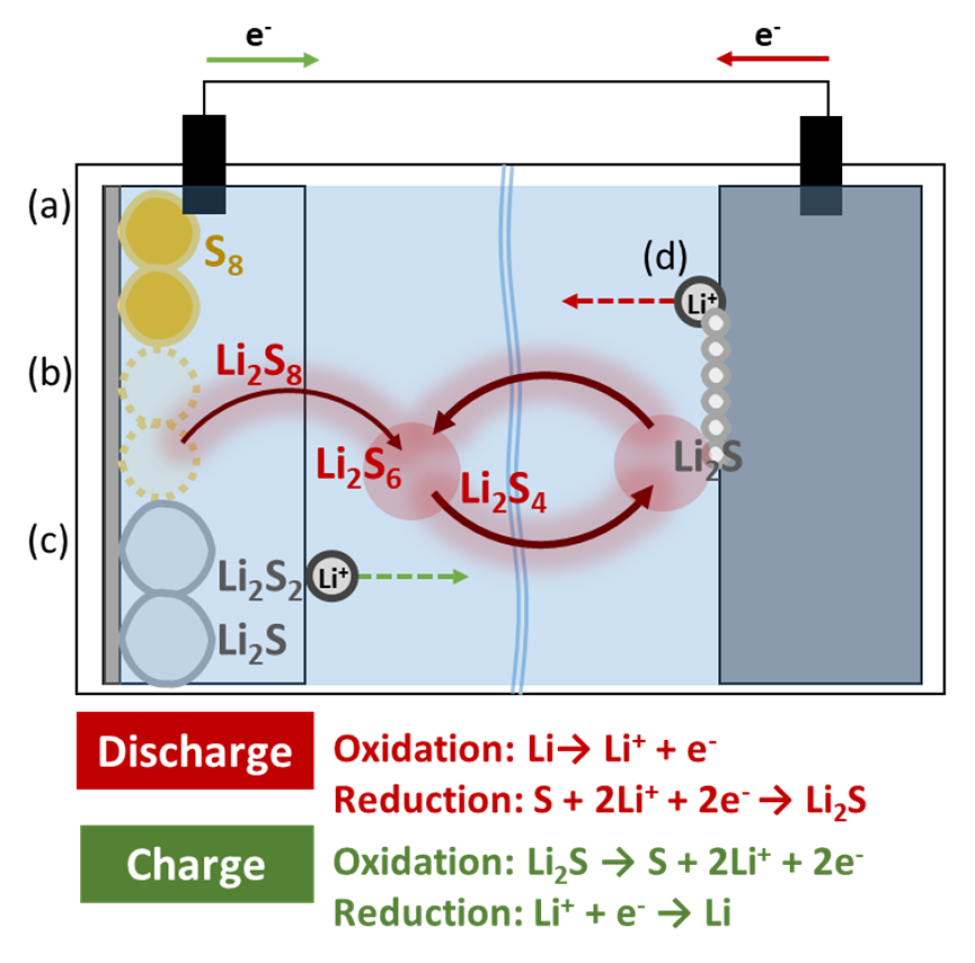
Figure 3. Potential challenges of the redox reactions of conversion-type electrodes in lithium-sulfur batteries: (a) solid sulfur has high insulation, (b) liquid polysulfides have high diffusivity, (c) solid lithium sulfide has high insulation, and (d) polysulfide diffusion leads to the degradation of the active electrode.
Advanced Lithium-Sulfur Battery
The electrochemical lithium-sulfur battery has undergone nearly 10 years of research and development, with various new materials and structural components being introduced. The functional materials used are widely involved in polymers, ceramics, and metals according to the volume of research publications. Over the years, various research materials have entered and exited the research scope with the rise of research trends, yet all types of materials still rely heavily on a large amount of carbon-based materials integrated with lithium-sulfur batteries. However, starting in 2020, when the lithium-sulfur battery startup industry began to enter the energy storage market, it was found that its unique conversion battery reaction and the solid-liquid phase change of the cathode are significantly influenced by battery process parameters. This influence extends beyond the simple issues of scaling and mass production costs between academic research and industrial applications; it delves into the fundamentals of battery electro-performance and reaction electrochemistry. Consequently, the research and development results related to the material limitations of the aforementioned electrochemical lithium-sulfur batteries can only demonstrate data advantages, while in practice, many challenges still remain.
A closer look at the electrochemical reactions of lithium-sulfur batteries reveals that the solid sulfur in the fully charged state and the solid lithium sulfide in the fully discharged state both exhibit high insulation properties. To compensate for the low electrochemical utilization rate caused by the high resistance of insulating materials and the low electrochemical stability and efficiency due to the high polarization phenomenon during the reaction process, a large amount of conductive porous carbon and various functional materials are added to the synthesis of active material composites. Additionally, when mixed with a large amount of extra conductive carbon, the actual active material participating in the energy storage discharge reaction in the electrode is below the low standard of 60 wt% sulfur content. This results in low specific capacity and overestimated battery performance. The addition of a large amount of inactive materials, such as porous carbon materials and functional materials, is intended to suppress the loss of polysulfides by utilizing the high specific surface area and large pore volume of porous materials, as well as the surface adsorption properties of functional materials. However, this research route has been pointed out to further cause the electrolyte to be absorbed and depleted by the porous carbon and functional materials, necessitating the addition of excess electrolyte during the manufacturing process to ensure sufficient wetting of the components. Furthermore, a large amount of surplus electrolyte is required to replenish what is continuously consumed by the adsorbed materials and electrodes during the reaction process, leading to as much as 20 µL mg.-1The above high electrolyte-to-sulfur ratio. Excess electrolyte leads to low energy density and overestimated polysulfide stability, also masking the polarization issues and reaction dynamics calculations that begin with the reduction and oxidation reactions of solid sulfur and lithium sulfide. In the production of the cathode, the vast majority of lithium-sulfur batteries also use a very low sulfur loading of about 1-2 mg cm.-2Conduct various battery electrochemistry and performance demonstrations, but the low sulfur loading cathode cannot truly reflect the insulation and polarization phenomena brought by solid-state sulfur and lithium sulfide, nor can it accurately present the issues of liquid polysulfide loss or retention effectiveness. In contrast, the vast majority of lithium-sulfur batteries will use an excess of lithium metal electrodes combined with a high amount of electrolyte, which masks the irreversible lithium consumption caused by the conversion battery reactions and the solid-liquid phase changes of the cathode.
In this regard, on the leverage of apparent performance data and actual application value, the research and development route of the new generation of electrochemical lithium-sulfur batteries has begun to be revised. The research on advanced lithium-sulfur batteries needs to be based on the improvement of basic battery process technical parameters, striving to present real and referenceable electrochemical analysis data, or further exploring battery performance and practicality. The key indicators for advanced lithium-sulfur batteries focus on meeting battery technology parameters, emphasizing the enhancement of the insufficient active materials in the cathode and reducing the excessive electrolyte and anode materials in the battery, while integrating various battery process technical parameters into the same battery.
Sulfide electrolyte lithium-sulfur battery
Advanced lithium-sulfur batteries have been proposed since 2021, with significant improvements in battery performance serving as the basis for research directions based on industrial parameters, thereby presenting real electrochemical data of the batteries. Firstly, to present the data and performance reliability of the key cathode part of lithium-sulfur batteries, it is required at the process technology level that the total active material content and loading of the sulfur cathode must reach over 60-80 wt% sulfur content and 4 mg cm.-2The low standard for sulfur loading above can demonstrate the effectiveness of modifying the positive electrode materials or compositions. This is mainly because the thick films of high loading electrodes can directly reflect the ion transport and diffusion within the electrode as well as the electron transfer impedance. This allows for the study of the resulting active material utilization and reversibility. High loading electrodes will also exhibit the conditions derived from the significant diffusion of a large amount of polysulfides that appear during the charging and discharging process in a real environment. Furthermore, since the generation of liquid polysulfides differs from the reactions in lithium-ion batteries, most studies tend to suppress their generation or amount. However, liquid polysulfides are essential intermediates in the charging and discharging reactions of lithium-sulfur batteries. Therefore, more realistic testing conditions are needed to analyze the diffusion of polysulfides in the battery and the resulting corrosion behavior. This part of the research also requires further maintenance of the electrolyte amount at the process technology level to achieve 5-10 µL mg.-1The electrolyte-to-sulfur ratio, under this condition, causes lithium-sulfur batteries to often exhibit a semi-dry battery state during production, becoming a branch of solid-state batteries, namely the sparse electrolyte lithium-sulfur battery. Due to the ability of sparse electrolyte lithium-sulfur batteries to present a large number of more realistic battery reactions, it has quickly become an emerging research field in lithium-sulfur battery studies that pursues the authenticity of data science and corrects old information. It has also exerted its influence in mainstream journals, with an increasing number of reputable journals beginning to require the submission of multiple battery process technologies and industrial parameters as a basis for data performance evaluation or as future review criteria.
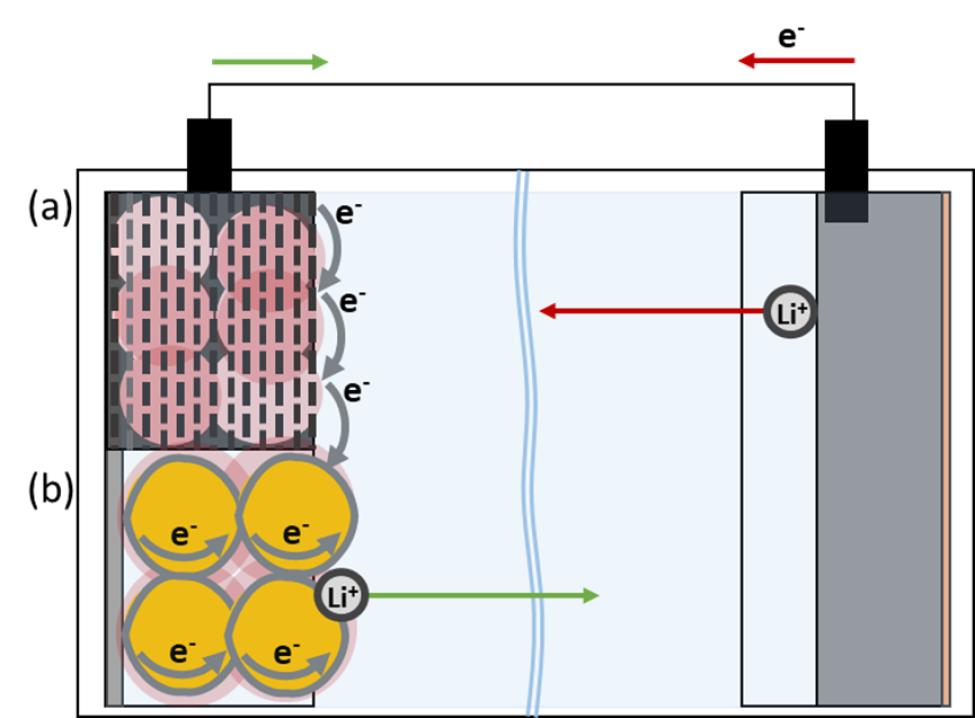
The development of quasi-electrolyte lithium-sulfur batteries, compared to early lithium-sulfur battery research, requires identifying the electrochemical characteristics of high-capacity sulfur cathodes during the process of reducing electrolyte in the early stages of research. This is followed by gradually balancing the optimization possibilities of sulfur content, capacity, and electrolyte usage based on fundamental electrochemical characteristics. Recent studies have found that cathode composite materials composed of low specific surface area and high conductivity materials, along with new components or battery structures, can effectively enhance the conductivity of sulfur cathodes while simultaneously reducing the amount of electrolyte used and slowing down the consumption during the reaction process. Therefore, designs can accommodate a large amount of active materials within the conductive structure, maintaining the cycling capability of high-capacity sulfur cathodes in quasi-electrolyte lithium-sulfur batteries through a rapid electron transfer network under low electrolyte consumption. Conductive carbon fiber substrates made by electrospinning or composite non-porous conductive carbon substrates can achieve 5-20 mg cm.-2The high sulfur loading electrode is based on a benchmark of approximately 70 wt% sulfur content, at 4-10 µL mg.-1In the battery with low electrolyte, it shows 10 mAh cm.-2The electrode has a capacity and high energy density of 20 mWh cm.-2Furthermore, by suppressing the loss of the electrolyte, the battery achieves a long cycle life of 200 cycles and a shelf life of over 3 months (as shown in Figure 4a) [16,17,21]; subsequent research and development of battery manufacturing processes and cell assembly mechanisms have also proposed suitable phase separation membranes, hot pressing processes, selective adsorption, core-shell electrodes, and composite electrodes, among other novel studies, to continuously optimize the characteristics of the lithium-sulfur battery with a low electrolyte volume [19,22-25].
On the other hand, functional adsorption materials, when developed as substrates with low specific surface area and without excessive pores, can capture polysulfides through surface chemical adsorption, inhibiting the loss of active materials and the addition or consumption of excessive electrolyte in lithium-sulfur batteries; when such materials possess high conductivity, the captured polysulfides can continuously react with lithium ions that are stably conducted in the electrolyte and electrons that are rapidly transferred in the substrate. Through the adsorption of metal atoms of oxide materials to polysulfides and the adsorption of oxygen atoms to lithium, most oxides can stably adsorb polysulfides under polar conditions; when such materials are developed into conductive metals with few successful cases, such as metal-coated metal/sulfur energy storage materials, they can stabilize polysulfides in composite materials and maintain stable electron and ion transport, achieving 5-20 mg cm.-2With a high sulfur loading electrode containing 70-75 wt% sulfur, and demonstrating 10-30 mWh cm in a low electrolyte battery.-2the excellent high energy density and long cycle life of 200-500 cycles (as shown in Figure 4b) [18,20,29].
solid-state electrolyte lithium-sulfur battery
Advanced lithium-sulfur batteries can also combine new technologies of reaction mechanisms and structural compositions, integrating electrochemical lithium-sulfur batteries with solid-state electrolytes to create solid-state electrolyte lithium-sulfur batteries. This new lithium-sulfur battery system uses solid-state electrolytes as the key component, serving as an isolation layer to prevent electronic short circuits and also as an ionic channel to stabilize the transfer of lithium ions between the two electrodes and ensure a stable distribution at the electrode interface. Accordingly, solid-state electrolytes need to possess high electronic insulation properties and high ionic conductivity reaching ∼10.−4S cm-1The high lithium ion transport value is approximately close to 1, along with low interfacial resistance with both the positive and negative electrodes and high electrochemical stability. The introduction of solid-state electrolytes in the development of lithium-sulfur batteries allows for the design of solid-state lithium-sulfur batteries that effectively block the diffusion of polysulfides, or suppress the generation of polysulfides in all-solid-state lithium-sulfur batteries. However, the use of solid-state electrolytes in lithium-sulfur batteries has been found in new research to face challenges at the electrode-electrolyte interface. The negative electrode encounters low electrochemical stability and compatibility with lithium metal, leading to irregular lithium deposition, which increases local stress and degrades lithium metal. The positive electrode faces the solid-solid interface separation of the sulfur positive electrode and high interfacial impedance, resulting in permanent separation between the active material, solid-state electrolyte, and conductive agent during the cycling process. This chemical-mechanical failure causes rapid capacity decay and short cycle life of the battery. In response, different solid-state electrolytes, based on the advantages and disadvantages of the native materials, gradually give rise to different adaptive optimizations. Common solid-state electrolytes can be broadly categorized into organic polymer solid-state electrolytes and inorganic oxide and sulfide solid-state electrolytes.
Polymer solid electrolytes are organic solid electrolytes, often composed of lithium salts dissolved in a polymer matrix, with advantages such as flexibility, lightweight, chemical stability, and high safety, especially the advantages of low cost and ease of preparation. The commonly used polymer for polymer solid electrolytes is polyethylene oxide, and lithium ions are provided by lithium salts of fluoride salts, through polyethylene oxide–CH.2CH2The O–group allows lithium salts to dissolve within it, and lithium ions are then transmitted through the formation and breaking of Li-O bonds provided by the ether groups in the polymer backbone and segmental motion. Another type aims to improve the ionic conductivity of polymer solid electrolytes by incorporating polyacrylonitrile, polyvinylidene fluoride, and polymethyl methacrylate to create gel solid electrolytes. Organic solid electrolytes based on polyethylene oxide, polyacrylonitrile, and polymethyl methacrylate can form gel solid electrolyte coatings or spun electrolyte films, which, when combined with polysulfide cathodes, create interfaces with low electrochemical impedance, thereby enhancing the sulfur loading capacity of solid electrolyte lithium-sulfur batteries to 4-16 mg cm.-2and enable the battery to achieve 200 cycles and C/20-1C fast charging and discharging capabilities (as shown in Figure 5a) [32-34].
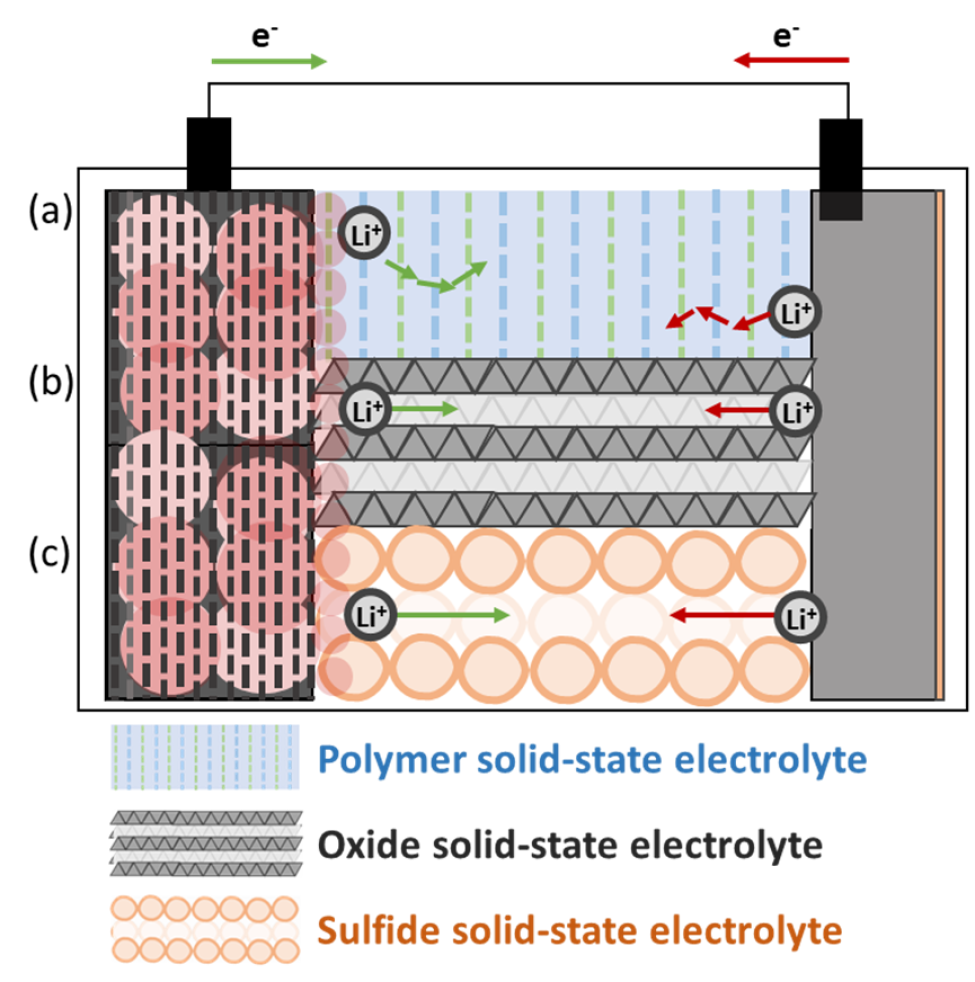
Figure 5.Schematic diagram of solid-state electrolyte lithium-sulfur battery:(a)Polymer,(b)Oxides, and(c)Sulfide solid-state electrolyte.
Oxide solid electrolytes are a branch of inorganic solid electrolytes, mainly composed of lithium superionic conductors, perovskites, garnets, and other structural oxide ceramics that form stable crystal structures and lithium ion transport channels. Lithium superionic conductor-type electrolytes are based on Li2+2xZn1−xGeO4Structure-oriented, the ceramic body utilizes [Li11Zn(GeO4)4]3-The crystal structure network accommodates 3 lithium ions that can be transported in the vacancy channels, derived materials such as Li(4-x)Si(1-x)PxO4 and Li(3+x)GexV(1-x)O4Both have good ionic conductivity and partially improved material physical and chemical stability. Perovskite structured electrolytes with Li3xLa(2/3)-x□(1/3)-2xTiO3 as the main component, with 10−3S cm-1The high lithium-ion conductivity and the aforementioned electrochemical stability and high physicochemical stability will focus on the ceramic body grain boundary resistance and lithium metal interface stability. The garnet-structured electrolyte is based on Li7La3Zr2O12 and Li6.4La3Zr1.4Ta0.6O12The structure is the main focus, with a high lithium-ion conductivity that can reach 10.−4-10-3S cm-1The sulfide solid electrolyte is another branch of inorganic solid electrolytes, which can be made from the lithium superionic conductor Li of crystalline sulfide ceramics.10GeP2S12structure, achieving 10 through its lithium ion conduction channels in crystal vacancies.-3-10-2S cm-1Conductivity; or by amorphous sulfide ceramics Li2S–SiS2 or Li2S–P2S5Composition, also reaching 10-4-10-3S cm-1Ionic conductivity. Inorganic solid-state electrolytes can also be combined with polysulfide cathodes to eliminate excessive solid-solid interfacial resistance, and stabilize the polysulfide cathode in solid-state lithium-sulfur batteries with long cycle life and high rate charge-discharge capability (as shown in Figures 5b and c) [35-37].
Conclusion
The development of lithium-sulfur batteries aims to break through the energy density development bottleneck and high cost limitations of existing commercial lithium-ion batteries. The research on advanced lithium-sulfur batteries corrects the old mindset of developing lithium-sulfur batteries based on lithium-ion batteries and aims to dispel past misunderstandings and misconceptions about the overestimated performance of lithium-sulfur batteries. By integrating solid-state electrolytes, which are also next-generation batteries, the advanced lithium-sulfur batteries combine quasi-electrolyte batteries and solid-state electrolyte batteries to innovate the reaction mechanism of lithium-sulfur batteries, allowing the combination of high-capacity and low-cost sulfur electrodes with lithium electrodes to achieve high energy density lithium-sulfur batteries. It also integrates the battery's process parameters and structural composition, making advanced lithium-sulfur batteries more academically and industrially practical, while also enabling the development of high energy density batteries with excellent cycle stability and battery safety.
Reference:
[1] J. Liu, Z. Bao, E. J Dufek, J. B. Goodenough, P. Khalifah, Q. Li, B. Y. Liaw, P. Liu, A. Manthiram, Y S. Meng, V. R. Subramanian, M. F. Toney, V. V. Viswanathan, M. S. Whittingham, J. Xiao, W. Xu, J. Yang, X.-Q. Yang, J.-G. Zhang, Nat. Energy, 2019, 4, 180-186.
[2] J. B. Goodenough, K. S. Park, J. Am. Chem. Soc., 2013, 135, 1167-1176.
[3] A. Manthiram, J. B. Goodenough, Nat. Energy, 2021, 6, 323.
[4] A. Manthiram, J. Phys. Chem. Lett., 2011, 2, 176–184.
[5] A. Manthiram, ACS Cent. Sci., 2017, 3, 1063–1069.
[6] A. Manthiram, Nat. Commun., 2020, 11, 1550.
[7] A. Bhargav, A. Manthiram, Next Energy, 2023, 1, 100012.
[8] A. Bhargav, J. He, A. Gupta, A. Manthiram, Joule, 2020, 4, 285–291.
[9] S. Wang, H. Xu, W. Li, A. Dolocan, A. Manthiram, J. Am. Chem. Soc., 2018, 140, 250-257.
[10] A. Manthiram, Y. Fu, S.-H. Chung, C. Zu, Y.-S. Su, Chem. Rev., 2014, 114, 11751-11787.
[11] A. Manthiram, S.-H. Chung, C. Zu, Adv. Mater., 2015, 27, 1980-2006.
[12] S.-H. Chung, A. Manthiram, Adv. Mater., 2019, 31, 1901125.
[13] S.-H. Chung, A. Manthiram, Adv. Funct. Mater., 2018, 28, 1801188.
[14] S.-H. Chung, A. Manthiram, Joule, 2018, 2, 710-724.
[15] S.-H. Chung, A. Manthiram, Adv. Mater., 2018, 30, 1705951.
[16] Y.-J. Yen, S.-H. Chung, Chem. Commun., 2021, 57, 2009-2012.
[17] Y.-C. Ho, S.-H. Chung, Chem. Eng. J., 2021, 422, 130363.
[18] C.-S. Cheng, S.-H. Chung, Chem. Eng. J., 2021, 429, 132257.
[19] G.-T. Yu, S.-H. Chung, Small, 2023, 19, 2303490.
[20] C.-Y. Kung, S.-H. Chung, Mater. Horiz., 2023, 10, 4857-4867.
[21] C.-C. Wu, Y.-C. Ho, S.-H. Chung, J. Mater. Chem. A, 2023, 11, 24651-24660.
[22] Y.-H. Tseng, Y.-C. Lin, Y.-H. Wu, J.-M. Ting, S.-H. Chung, J. Energy Storage, 2023, 68, 107767.
[23] C.-C. Wu, S.-H. Chung, J. Power Sources, 2023, 566, 232944.
[24] Y.-J. Yen, T.-H. Chen, Y.-T. Wang, A. Robles, M. Đerić, O.Š. Miljanić, W.
[25] Kaveevivitchai, S.-H. Chung, J. Power Sources, 2023, 565, 232891.
[26] Y.-C. Wu, S.-H. Chung, J. Mater. Chem. A, 2023, 11, 9455-9463.
[27] Y.-C. Huang, H.-I. Hsiang, S.-H. Chung, ACS Sustainable Chem. Eng., 2022, 10, 9254–9264.
[28] S.-H. Chung, Y.-H. Wu, Y.-H. Tseng, T.X. Nguyen, J.-M. Ting, ChemSusChem A, 2023, 16, e202300452.
[29] Y.-J. Wang, C.-C. Hung, S.-H. Chung, Ceram. Int., 2023, 49, 11846-11853.
[30] C.-S. Cheng, S.-H. Chung, Batter. Supercaps, 2022, 5, e202100323.
[31] X.-B. Cheng, C.-Z. Zhao, Y.-X. Yao, H. Liu, Q. Zhang, Chem., 2019, 5, 74-96.
[32] Q. Zhao, S. Stalin, C.-Z. Zhao, L. A. Archer, Nat. Rev. Mater., 2020, 5, 229-252.
[33] L.-L. Chiu, S.-H. Chung, Polymers, 2023, 15, 1460.
[34] L.-L. Chiu, S.-H. Chung, J. Mater. Chem. A, 2022, 10, 13719-13726.
[35] L.-L. Chiu, S.-H. Chung, Polymers, 2021, 13, 535.
[36] Y.-J. Yen, S.-H. Chung, J. Mater. Chem. A, 2023, 13, 4519-4526.
[37] Y.-J. Yen, S.-H. Chung, ACS Appl. Mater. Interfaces, 2021, 13, 58712-58722.
[38] Y.-C. Huang, B.-X. Ye, S.-H. Chung, RSC Adv., 2024, in press.