
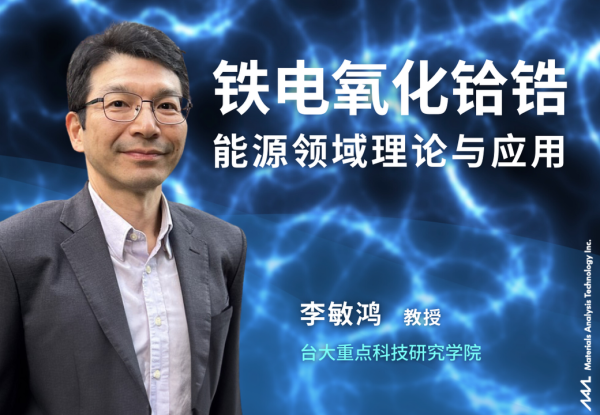
Energy-saving ferroelectric zirconium oxide in the theory and application of the energy field
The crystal structure characteristics of ferroelectric materials allow them to exhibit thermodynamic reversible interactions between electrical, thermal, and mechanical variables.
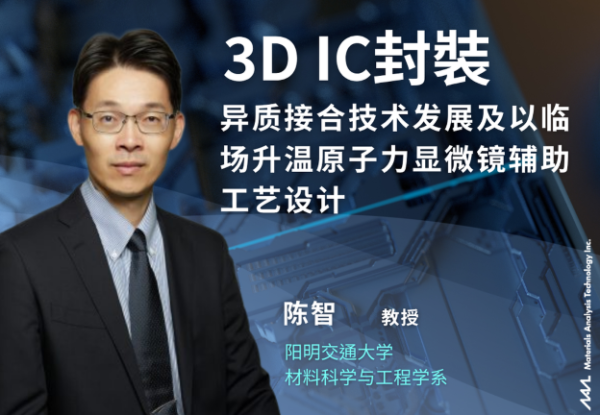
3D IC packaging: Development of heterogeneous bonding technology and process design assisted by in-situ heated atomic force microscopy.
Driven by AI and high-performance computing, 3D IC packaging has become a key factor in chip performance. Through in-situ atomic force microscopy (AFM) observation of the thermal expansion behavior of copper/SiO₂ embedded through holes, the research found that nanocrystalline copper can enhance the expansion by over 100%, significantly strengthening the process window and packaging reliability.
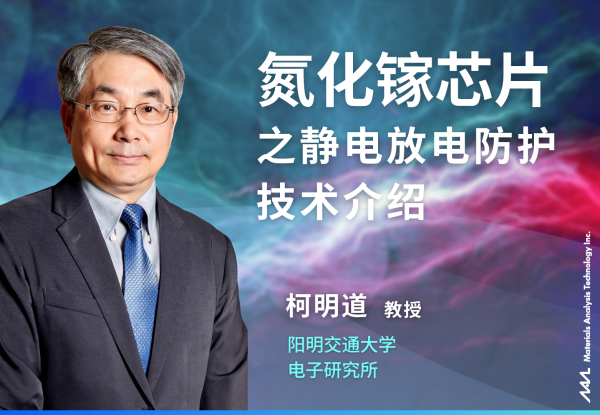
Introduction to Electrostatic Discharge Protection Technology for Gallium Nitride Chips
Gallium Nitride (GaN) devices are rapidly gaining popularity in applications such as electric vehicles, power conversion, low Earth orbit satellites, and high-frequency communications, due to their high efficiency and high power characteristics. However, in these high-stress and high-reliability demanding environments, how to enhance electrostatic discharge (ESD) protection capability has become a key technical issue to ensure the stable operation of GaN chips.
Silicon photonics technology: Opening the door to the future of high-speed optical communication.
Silicon photonics utilizes silicon materials to manufacture optical components, making them compatible with existing semiconductor processes, providing efficient, low-power, and mass-producible optical solutions.
Innovative Breakthroughs in Copper Hybrid Bonding Technology: Key Technologies for 3D Integrated Circuits and Advanced Packaging
The development of 3D IC technology is like stacking "LEGO blocks," vertically integrating chips with different functions, which not only saves space but also significantly enhances overall system performance, bringing new possibilities for breaking the Moore's Law! However, to ensure that these "blocks" of chips can align precisely, communicate stably, dissipate heat effectively, and avoid short circuits or aging, the key lies in "how to connect them."
Silicon photonics technology promotes advanced high-performance computing
Faced with the massive computing demands of AI and HPC systems, how silicon photonics technology can enhance data transmission rates and reduce power consumption between data centers and chips through optical interconnect technology, providing a key pathway for the next generation of high-performance computing architectures.
Next-generation energy storage technology: advanced lithium-sulfur batteries
Lithium-sulfur battery (Li-S Battery) is regarded as an important breakthrough in next-generation battery technology. As lithium-ion batteries gradually approach their technical limits, lithium-sulfur batteries, with advantages such as "high energy density, low cost, and environmentally friendly lightweight," demonstrate strong application potential in fields such as electric vehicles, aerospace, drones, and smart grids that require large-scale energy storage. They are rapidly becoming a global research and development focus!
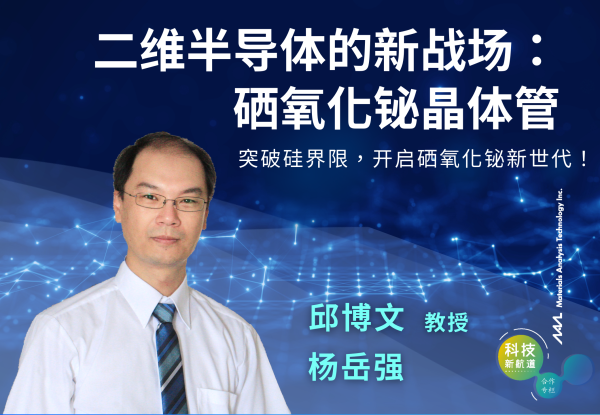
The new battlefield of two-dimensional semiconductors: bismuth selenide transistors
As the miniaturization of silicon-based transistors approaches physical limits, two-dimensional semiconductor materials such as bismuth selenide are becoming new candidates for transistors in the post-silicon era due to their high carrier mobility, advantages of native oxide layers, and potential for large-area growth.
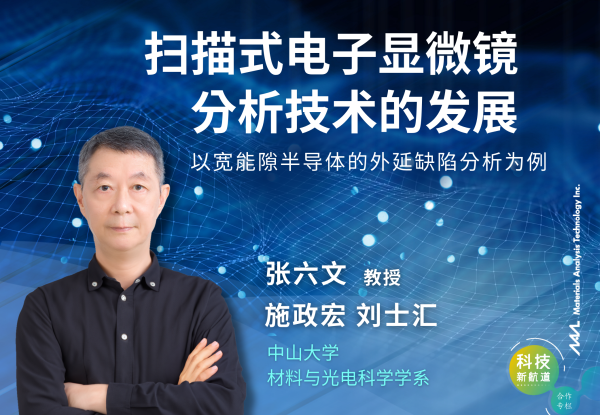
Development of Scanning Electron Microscopy Analysis Technology - Taking the Analysis of Epitaxial Defects in Wide Bandgap Semiconductors as an Example
This article mainly focuses on several wide bandgap semiconductors with a hexagonal structure, such as Gallium Nitride (GaN, Eg=3.4 eV), Aluminum Nitride (AlN, Eg=6.2 eV), Zinc Oxide (ZnO, Eg=3.3 eV), and Silicon Carbide (4H-SiC/6H-SiC, Eg=2.8-3.2 eV). These wide bandgap semiconductors, especially Gallium Nitride, Aluminum Nitride, and Zinc Oxide, have been widely used in surface acoustic wave devices, ultraviolet and blue light detectors, light-emitting diodes, and laser diodes.
Secondary Ion Mass Spectrometry (SIMS) in the Analytical Applications of Quality Monitoring in Integrated Circuit Processes
Top semiconductor application chips not only require excellent IC circuit design, but also need perfect nano-device structures combined with next-generation or advanced semiconductor process technologies to achieve the best performance of the chips.