
AEC-Q006 2025 Edition Key Changes Full Analysis
Preface
AEC-Q006 is a reliability verification standard established by the Automotive Electronics Council (AEC) specifically for automotive electronic components that use copper wire as interconnect materials for chip packaging. The development of this standard stems from the trend of copper wire gradually replacing traditional gold wire in packaging technology.
With the evolution of packaging technology, more and more automotive component manufacturers are beginning to adopt copper wire to enhance product competitiveness due to its advantages of low cost, high conductivity, and good mechanical strength. However, copper wire has significant differences in physical and chemical properties compared to gold wire, especially in harsh automotive environments such as high temperature, high humidity, and high power, where it is prone to challenges such as oxidation, corrosion, and decreased bonding reliability.
In response to these technical challenges, AEC launched the AEC-Q006 Rev-B version in 2025, implementing multiple enhancements and adjustments regarding the characteristics of copper wire. This version not only expands the testing projects and verification conditions but also establishes stricter regulations for packaging materials, bonding quality, and long-term reliability verification methods, ensuring the safety and stability of copper wire interconnect technology in the automotive electronics field.
Five core highlights of the 2025 version
1. Strengthened definitions for materials and bonding techniques
Clearly define the technical scope of "copper wire interconnects," including different forms such as bare copper, plated copper (such as tin or silver plating), and copper alloys. Compared to gold wire, copper wire requires additional consideration for oxidation and interface reliability.
2. Strengthening of reliability testing requirements
The reliability testing conditions have been upgraded, such as the high temperature storage life (HTSL), where the test temperature for Grade 0 components is raised to 175°C. The temperature cycle (TC) test emphasizes the difference in the coefficient of thermal expansion between copper and packaging materials, requiring stricter cycle counts and temperature ranges. The humidity and temperature bias tests (HAST/THB/H3TRB) conduct accelerated testing for Cu/Al interface corrosion, among others.
The requirements for wire bonding's Ball + Stitch/Wedge pull, Ball shear, and Cross-section have been refined. For example, in the Ball + Stitch/Wedge pull and Ball shear tests, it is clearly required to specify which fracture surfaces are not allowed after testing, filling in the gaps that past testing methods did not cover. In Cross-section Inspection, it is necessary to analyze the distribution of IMC (intermetallic compounds) within the solder joints, as well as the initiation of cracks and corrosion conditions.
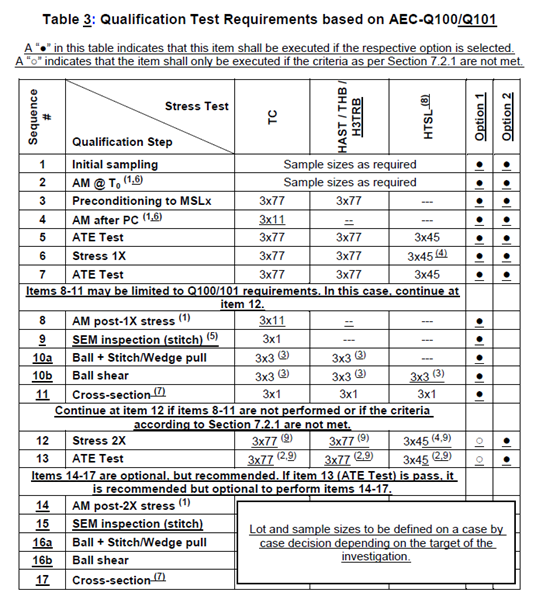
Figure 1: AEC-Q006 Rev. B Verification Project
3. Data Submission and Verification Process
Request to provide complete tensile/shear force data (average value, standard deviation, T0 limit) and AM images and cross-sectional analysis before and after the solder joint test. If the supplier has already mass-produced and has no copper wire failure records, re-verification can be waived, but evidence must be provided (e.g., annual shipment volume > 500,000 pieces).
4. Failure Mode and Risk Classification
New classifications of common failure modes for copper wire bonding surfaces, such as bond lift caused by copper oxidation, copper-aluminum interface embrittlement, copper wire necking, or fatigue failure, etc. At the same time, clear definitions of delamination acceptance standards are provided, and the use of C-mode Acoustic Microscopy for scanning is required. Delamination judgment criteria are provided for different stages (such as after MSL).
5. Integration with Other Standards
Cross-reference with standards such as AEC-Q100, Q101, Q102 to ensure consistency. JESD22-B116 (shear test) has expanded support for Cu ball bonds. The newly added JESD22-B120 document specifically defines the tensile testing methods for Cu wire, including ball pull, stitch pull, reverse bond, etc.
Why are these corrections important?
1. The use of copper wire has become mainstream: low cost, high conductivity, but significant reliability challenges.
2. Automotive electronics require high reliability: AEC-Q006 revisions ensure that copper wire components can operate stably in harsh environments.
Impact on the automotive electronics industry
|
Role |
impact |
|---|---|
|
IC design/packaging factory |
Need to update Cu wire bonding processes and testing procedures |
|
automotive module supplier |
Packaging components with higher reliability |
|
Quality/Reliability Engineer |
Need to be familiar with JESD22-B120 testing methods and AEC-Q006 Rev-B requirements. |
|
EMS/Contract Manufacturer |
Need to import CSAM, cut/pull test device and data analysis process. |
Conclusion
The 2025 version of AEC-Q006 has further refined the verification projects and reliability analysis of wire bonding to respond to the diverse combinations of materials used in packaging copper wire. To address this trend, MA-tek provides an integrated verification analysis service from reliability to failure analysis, allowing customers to execute AEC-Q006 copper wire verification more comprehensively and quickly.